BIS Certification for All Types of Switch Gear and Control Gear and their Assemblies

4.9


Toluene
Toluene is a very useful aromatic hydrocarbon that is used in many industries and is applied in paints, solvent adhesives, and a number of chemical products. The acceptable quality and safety of Toluene must be maintained due to its usage by almost every industry due to its versatility. India has a Quality Control Order (QCO) for Toluene under the Bureau of Indian Standards (BIS) to control its manufacture and also import. This initiative aims to uphold stringent quality benchmarks as outlined in IS 537:2011, to protect the health of the population and take care of sustainable industrial development.
The Toluene BIS QCO has not only laid down that the product shall be in compliance with certain performance standards but also the testing methods and laboratory norms to be followed by manufacturers. Thus, the acquisition of certification within the framework of the BIS for companies can increase market trust, expand market coverage, and meet the requirements of national legislation. This blog post will discuss the various facets of Toluene BIS QCO in India and including manufacturing processes, testing methods, certification, and finally explain why quality compliance is important to promote safer and better industrial practices to a greater extent..
BIS Registration Sample
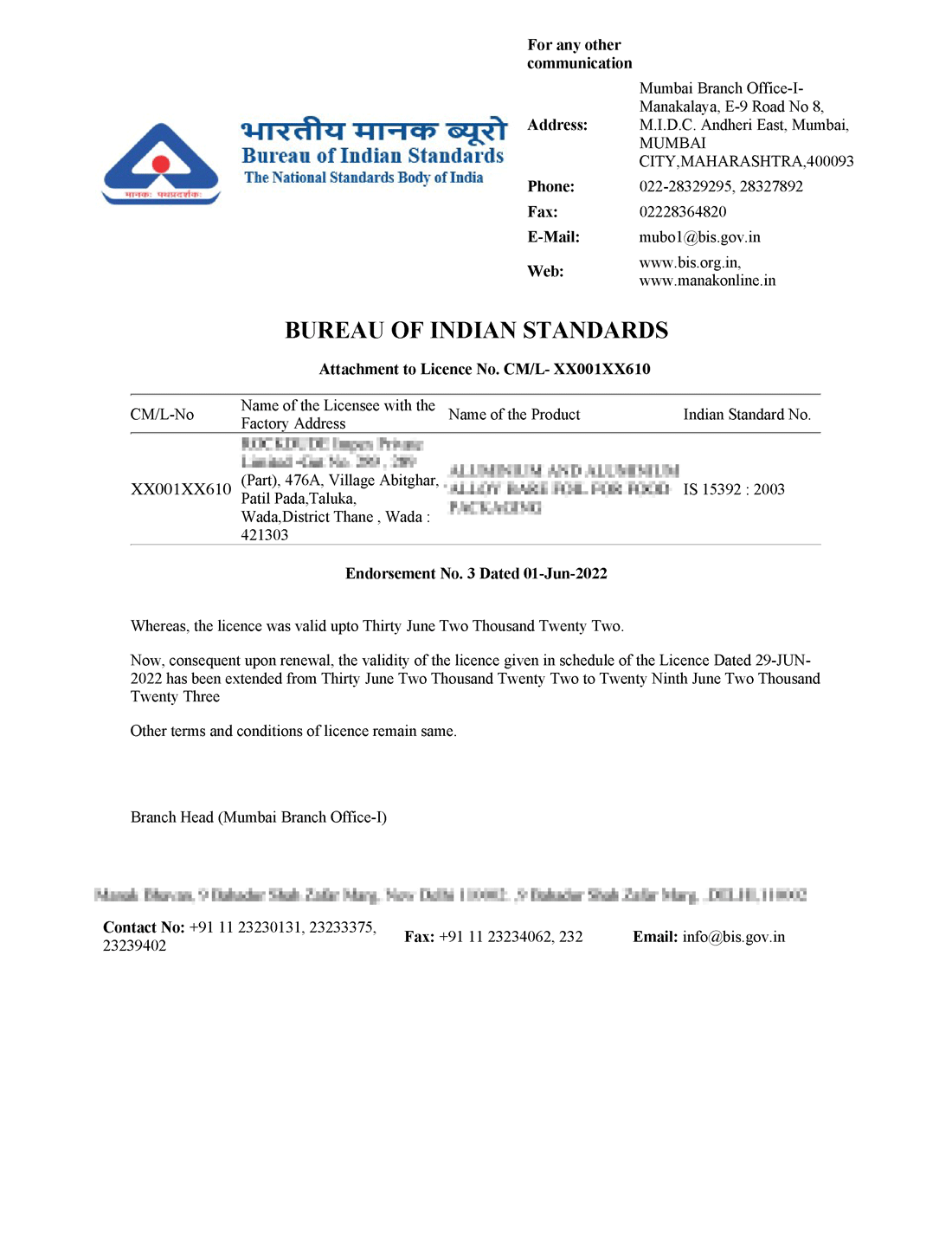
Table of Content

What is the Toluene?
Toluene is described as a colorless and highly inflammable liquid with an odor similar to that of benzene. Toluene also contains health hazards and has been covered by the Bureau of Indian Standards (BIS) under the Quality Control Order (QCO) in India. The specific standard applicable to Toluene is IS 537: 2011 which covers the features and standards that have to be provided by the manufacturers and importers to safeguard the health of people and the environment.
The QCO also requires Toluene manufactured in the country and that imported must meet these standards hence having a safety and quality requirement. This regulation is a measure in the Indian government’s ongoing measures to improve the quality of chemical products in the market.

Manufacturing Process
The manufacturing of Toluene typically involves several key steps:
- Raw Material Preparation: The basic inputs in the production of Toluene are benzene and methane which undergo some transformations.
- Chemical Reactions: The most common method of its formation is via catalytic reforming or through hydrodealkylation. In this process, naphtha is treated together with a catalyst with a view of subjecting it to high heat so that it forms Toluene together with other types of aromatics.
- Separation and Purification:Following the reaction, the mixture is distilled to isolate Toluene from other products and isolates as well as remainders.
- Cutting and Shaping:The mesh is then sized according to the application for which it is going to be used–be it gabion, mattresses, or netting.
- Quality Control:During the course of production, specimens are drawn for conformity assessment respecting the requirements of BIS against those specified in IS 537:2011.
Performance Requirement and Test Method
The performance requirements for Toluene as per BIS standards include::
- Purity:Toluene requires certain purity qualities although it is normally used in a purity of more than 99.5%.
- Physical Properties: Some of these properties include boiling point, density, and refractive index and should meet certain standards set by IS 537:2011.
- Chemical Composition :Speaking about the negative aspects reflecting the quality
Testing Methods
The testing methods for Toluene under BIS guidelines involve:
Sampling:
Sampling techniques must be used to ensure we get samples that can be considered as a true sample of a population.
Laboratory Analysis:
Accredited laboratories must use procedures that the standard IS 537:2011 provides for to test commodities.
Documentation:
:The requirement documenting of all tests and results is mandatory for compliance estimation.
Laboratory Requirements
To conduct testing on the Toluene effectively, laboratories must adhere to specific requirements:
- Equipment:should have state-of-art testing equipment like tensile testing machines, and spectrometers, ultrasonic testing gadgets.
- Qualified Personnel:Technicians have to understand and know additional testing techniques and protocols to conduct efficient tests.
- Quality Control Procedures: The applying organization should ensure quality assurance to enhance the reliability of the tested samples in laboratories.
Labeling and Marking Requirements
Labeling and markings are fundamental requirements of BIS standards regarding specifications for Toluene. Each product must include:
- Manufacturer's Name or Trademark: In a manner that tells the consumer who produced it with clarity, means everything is right.
- ISI Mark: The ISI mark has to be affixed prominently on the product in case the product has been certified to conform to Indian standards.
- Material Information: Material should be mentioned along the labels that the footwear is made from and any other information concerning the safe usage of the product.
- Packaging Requirements: It is also important to label the packaging with the product type and care instructions so that the customers can maintain the product for the longest time.
Documents Required for BIS Certification
The following are the given documents for BIS Certification:
| General Documents | Technical Documents |
|---|---|
| Business License | Plant Layout |
| Trademark License | List of Manufacturing Equipment |
| Application Form | Manufacturing Process Flow Chart |
| Authorization Letter | Product Literature |
| Laboratory Test Reports | List of testing equipment and machinery |
| MSME certificate | Product’s technical Specification |
| List of calibration certificate |
BIS Certification Process
The BIS certification process for Toluene involves several steps:
Step 1: Application Submission
Applications are filled including relevant documents that outline the production processes of the manufacturers.
Step 2: Factory Inspection
A BIS officer pays a visit to the manufacturing company in order to assess the levels of compliance with set regulations.
Step 3: Product Testing
The samples from the production batches are analyzed at the BIS-accredited laboratories.
Step 4: Issuance of License
As a result of the evaluation of these facilities and products, BIS grants permission to the manufacturers to use the ISI mark on their products.
Step 5: Surveillance Audits
To sustain the standards practice, normal assertions are carried out.
This is a process that the manufacturers need to understand so that they can get an efficient certification process.
Importance of BIS Certification
The BIS certification process for Braided Nylon Ropes for Mountaineering Purposes involves several steps:
- Market Access: It shall be marked with the ISI mark for it is compulsory for any manufacturer who wants their Mechanically Woven, Double- Twisted, Hexagonal Wire Mesh Gabions, Revet Mattresses and Rock Fall Netting and Other Rock Fall Netting and Other Products for Civil Engineering Purposes (Galvanized Steel Wire or Galvanized Steel Wire with polymer coating) to be sold in India. This means that without this certification, manufacturers cannot be able to sale their products to the market.
- Consumer Safety: Certification means that the products have to conform to given standards in order to prevent the consumer from using dangerous products.
- Quality Assurance: The BIS certification process helps ensure the quality standards of the products as it covers quality control aspects of the products.
- Regulatory Compliance: The BIS certification acts as an asset to manufacturers since it avails them of the legal standards that are accepted by the government, hence saving them from legal troubles.
- Brand Credibility: An ISI mark adds value to the business by providing consumers confidence that they are dealing with products that meet the nation’s quality standards.
- Environmental Considerations: The BIS, in its regulations, has put forward specific measures to restrict the use of some dangerous chemicals when producing products related to environmental effects in the industry.
Conclusion
The adoption of the Toluene QCO expands hopes qualitatively in product safety and environmental standards in India. So, holding with BIS standards will improve the quality of the product, get the confidence of customers as well, and get recognition from the government. For as long as organizations believe in the growth of their industries certification to maintain high standards is paramount.
Frequently Asked Questions (FAQs)
What is Toluene used for?
Toluene is mainly used in the manufacturing of chemicals which are solvents for industries and aircraft; production of paints, coatings, and adhesives.
What does BIS certification signify?
It means a product conforms to certain quality requirements and guidelines prescribed by the Bureau of Indian Standards.
Why is BIS certification necessary for both Toluene and cycle rubber tubes?
BIS certification ensures that both Toluene and cycle rubber tubes meet Indian safety and quality standards, guaranteeing product reliability and compliance. For more information, visit BIS Certification for Cycle Rubber Tubes.
Speak Directly to our Expert Today

Reliable

Affordable

Assured
Testimonials
"Explore how Professional Utilities have helped businesses reach new heights as their trusted partner."





It was a great experience working withProfessional Utilities. They have provided the smoothly. It shows the amount of confidence they are having in their field of work.

Atish Singh


It was professional and friendly experience quick response and remarkable assistance. I loved PU service for section 8 company registration for our Vidyadhare Foundation.

Ravi Kumar
I needed a material safety data sheet for my product and they got it delivered in just 3 days. I am very happy with their professional and timely service. Trust me you can count on them.

Ananya Sharma
Great & helpful support by everyone. I got response & support whenever I called to your system. Heartly thanx for Great & Super Service. Have a Great & Bright future of team & your company.

Prashant Agawekar
Thank you so much Professional Utilities team for their wonderful help. I really appreciate your efforts in getting start business. Pvt Ltd company registration was smooth yet quick.
Abhishek Kumar
I applied for Drug licence and company registration and their follow-up for work and regular updates helped me a lot. They are happily available for any kind of business consultancy.

Vidushi Saini
Great experience went to get my ITR done, process was quite convenient and fast. Had a few queries, am happy about the fact those people explained me all things I wanted to know.

Taniya Garyali
Great services provided by Professional Utilities. They are best in this industry and the best part is their prices are so affordable. Kudos to you. Now you guys are my full-time consultant.

Aftab Alam
Trusted By