What Are the Highlights of 40th GST Council Meeting?
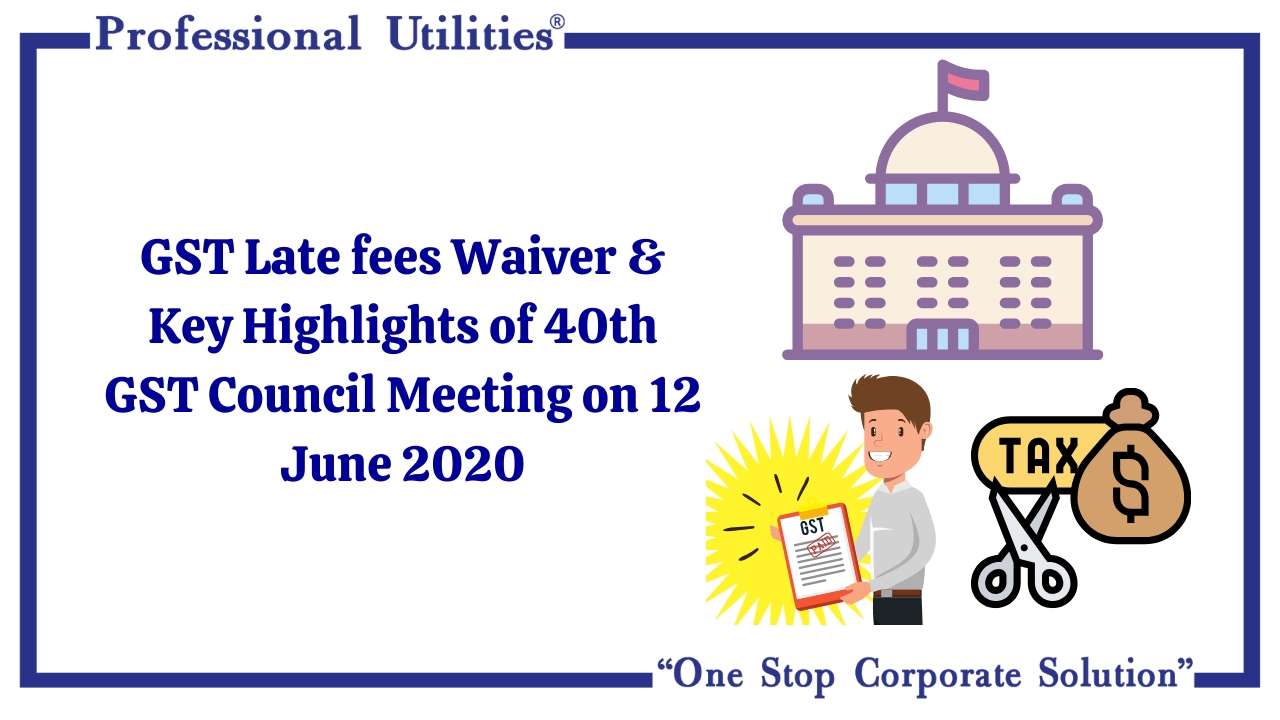
Finance Minister Nirmala Sitharaman today chaired the 40th GST Council meeting via video conferencing. This was the first meeting of the GST Council during the lockdown, where several measures to garner funds for compensation to states were discussed. Members of the GST Council interacted over videoconferencing in their first meeting since the coronavirus lockdown. For the period from July 2017 to January 2020, which is prior to the COVID period, many return filings were pending. For those with no tax liabilities who had not filed returns between July 2017 and January 2020, there will be zero late fees. For taxpayers with tax liabilities, the maximum late fee for non-filing of GSTR-3B returns for this period has been capped at ₹500. This relief applies to all returns submitted between July 1, 2020, and September 30, 2020, as clarified in the recent update on Know GST NIL or Rs 500 late fees applicable for which Taxpayer?.
The GST Council took these decisions to clean up return filing pendencies. Further relief has been offered to small taxpayers for late filing of returns for February, March, and April 2020. For small taxpayers with an aggregate turnover of up to ₹5 crore, the interest rate for late furnishing of GST returns for these months, beyond July 6, 2020, has been reduced from 18% to 9%. No interest will be charged for returns filed up to July 6, 2020, and the reduced 9% rate will apply till September 30, 2020. Additionally, small taxpayers with turnover up to ₹5 crore will receive a waiver of late fees and interest if they file GSTR-3B for May, June, and July 2020 by September 2020.
Taxpayers whose GST registrations were cancelled are being given an opportunity to apply for revocation of cancellation up to September 30, 2020, in all cases where cancellation occurred till June 12, 2020. The Council also decided to hold a special one-agenda meeting in July 2020 to discuss the compensation cess to be paid to states and how to handle related borrowings, if required. Additionally, the issue of inverted duty structure was discussed, as it leads to revenue generation problems and unanticipated refunds. The Council reached a consensus that inversion correction is necessary, with discussions focusing on the appropriate timeline for implementation.


Reliable
Businesses rely on us due to our Strong commitment to customer satisfaction.
Disclaimer:The information provided on this website is intended for general information purposes only. Although all reasonable efforts are made to ensure that the information provided is correct and reliable, it is not advised to be used as a substitute for professional advice. The information herein is not to be used in place of seeking professional services, counsel, or guidance. We highly advise that you consult a professional before you make any business or legal decisions regarding the information presented on this website. This website and its contents are given "as is", and we do not take any responsibility for any action that is taken based on information given on this website.

- Written by: Abhishek Yadav
- Fact-checked: Sahil Singh
- Updated on: March 31, 2026