
Online Trade License in Andhra Pradesh

4.9


Apply for Trade License in Andhra Pradesh - Process & Fees
General Trade License (GTL) permits are essential permits for businesses in Andhra Pradesh that enable them to engage in commercial activities legally and engage in transactions legally. Municipal Corporations and Municipalities within the state issue the trade licenses pursuant to Section 263 of the Andhra Pradesh Municipalities Act (1965) and 521 of the Andhra Pradesh Municipal Corporations Act (1994). Securing a Trade License in Andhra Pradesh ensures compliance with local regulations, safety norms, and zoning laws - something without which their activities could cease altogether.
Professional Utilities provides businesses with hassle-free trade license applications in Andhra Pradesh by streamlining the registration process online to ensure quick approval with no complications or delays.
We assist businesses across Visakhapatnam, Vijayawada, Guntur, Tirupati, Kurnool, Nellore, Rajahmundry, and Anantapur, helping them navigate regulatory requirements with ease. Contact Professional Utilities today for a smooth and efficient trade license registration process in Andhra Pradesh.
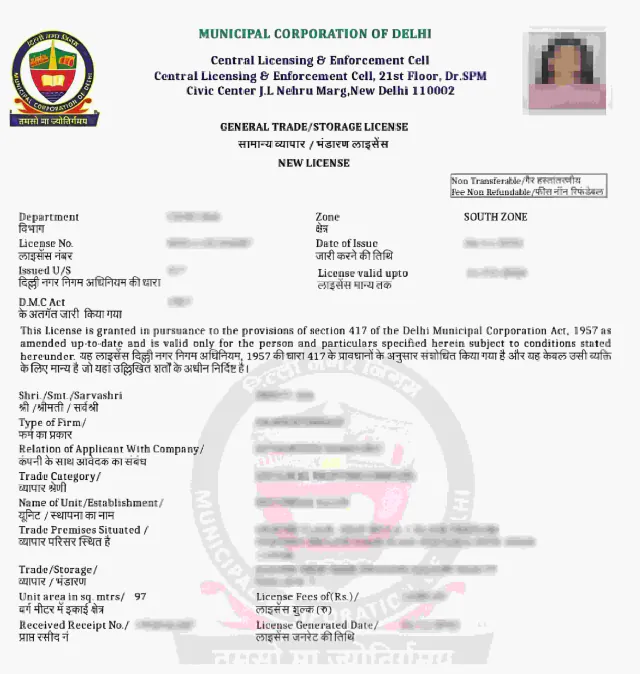
Trade Certificate [Sample]
Process to get a Trade License in Andhra Pradesh
Entities that engage in commercial activities must abide by the law and acquire a trade license in Andhra Pradesh by filling out the application form on the official website of the authorities with all the mandatory and specific details for the trade license in Andhra Pradesh.
- Step 1: Personal Details - Businesses may fill out their personal details in the application form.
- Step 2: Classification of Trade - The information about the trade's premises, description and category is to be filled for a trade license in Andhra Pradesh.
- Step 3: Property Details - The businesses are required to provide details about property, unit area, address of unit and more.
- Step 4: Establishment Details - The application form mandates information about establishment, type of constitution, and partner’s list.
- Step 5: Required Documents - Businesses may upload the required and specified documents as per the application form of trade license.
- Step 6: Online Payment - The application fee of the general trade license is to be paid by the candidates.
Once the above listed steps are completed, candidates can download the trade license in Andhra Pradesh through their dashboard by logging in.

Documents Required for Trade License in Andhra Pradesh
The required documents that the businesses would need to submit to get a trade license in Andhra Pradesh are listed below.
- Identity proof (with photograph) such as Aadhar card/ voter id/ pan card/ valid Indian passport/ permanent driving license, bank passbook with photograph and signature.
- Photograph of the establishment from the front, including commodities that are traded from the premises or the business being executed from the premises.
- Proof of legal occupancy of the establishment or allotment letter of government agency/ tenancy proof/ electricity/ water connection bill/ landline telephone bill/ lease deed/ sale deed/ GPA.
Fees for Trade License in Andhra Pradesh
The fees charged by the government for a trade license in Andhra Pradesh is tabulated below and it is categorized as per the localities and size of the infrastructure which will be premised for trades.
| Locality | ≤10 sqm | 10–20 sqm | 21–400 sqm | >400 sqm |
|---|---|---|---|---|
| A, B | ₹3,968 | ₹9,919 | ₹166/sqm | ₹83/sqm |
| C, D | ₹2,645 | ₹6,613 | ₹132/sqm | ₹66/sqm |
| E, F, G, H | ₹1,323 | ₹3,306 | ₹99/sqm | ₹50/sqm |
Note: The trade license in Andhra Pradesh for special categories has a different fee structure.
What is a Trade License in Andhra Pradesh
To start a business in Andhra Pradesh and execute commercial activities, an entity must follow the law and obtain a Trade License. A Trade License in Andhra Pradesh permits the businesses to sell, purchase or trade commodities and services with compliance with the legal framework. The Trade License in Andhra Pradesh is to ensure that the entities adhere to the rules established by the Municipal Corporations and Municipalities so that consumers' can trust the business and the entities hold credibility.
Various types and categories of trade licenses are offered by the Municipal Corporations and Municipalities apart from a trade license in Andhra Pradesh. Entities are required to satisfy the standard criteria and regulations of the authorities to acquire a trade license in Andhra Pradesh.
Benefits of a Trade License in Andhra Pradesh
The Trade License in Andhra Pradesh is to ensure that the businesses are obliged to the laws and regulations set by the authorities. Some of the benefits that entities get with a trade license in Andhra Pradesh are listed below.
- The Trade License in Andhra Pradesh is significant to ensure that the entities hold credibility and consistent consumer trust.
- Businesses with a trade license in Andhra Pradesh have to comply with the rules to avoid imposition of penalties and legal consequences.
- The businesses are required to obtain a general trade license in Andhra Pradesh to comply with the set regulations and continue to conduct business conveniently.
- Businesses with a trade license in Andhra Pradesh benefit from a positive image and stand out amongst competitors.
Penalties for Non-Compliance of Trade License In Andhra Pradesh
Learn about the penalties that the business who do not possess a trade license in Andhra Pradesh, or disobey the set rules or continue to trade with an outdated trade license in Andhra Pradesh may face:
- The business who possesses a trade license in Andhra Pradesh may face some suitable legal action under some cases.
- A trade license in Andhra Pradesh can be revoked or suspended, if the business is found to be breaking any of the rules by causing disturbances in the nearby area.
- If an entity violates the set guidelines of the trade license in Andhra Pradesh, then the authorities will impose a penalty on the entities.
- The authorities may impose fines and penalties on any business that conducts commercial activities without a trade license in Andhra Pradesh.
- Absence of trade license in Andhra Pradesh from authorities will result in lack of customer trust and lead to low revenue and potentially closure permanently.
- The authorities will charge half of the licensing fee on a business that fails to renew their trade license in Andhra Pradesh within appropriate time.
Conclusion
Businesses can commit transactional activities and engage in deals with other businesses with adherence to the legal framework once they have obtained a trade license in Andhra Pradesh. Businesses are mandated to have a trade license in Andhra Pradesh to ensure credibility and gain consumer trust. The Trade License in Andhra Pradesh is an assurance that the businesses operate with adherence to the law prior to conducting any financial activities, including trading, buying, or selling of commodities and services. The trading license in Andhra Pradesh is to be renewed after its validity of three-year is expired to avoid penalties and legal consequences.
FAQ's on Trade License in Andhra Pradesh
What is a Trade License in Andhra Pradesh?
A Trade License in Andhra Pradesh permits businesses to legally engage in commercial activities such as the sale, purchase, or trade of goods and services. The trade license in Andhra Pradesh ensures compliance with the legal framework set by the authorities.
Do I need a Trade License in Andhra Pradesh?
A trade license in Andhra Pradesh is mandatory to operate a business within a legal framework and ensures health and safety standards set by the authorities.
Can a Trade License in Andhra Pradesh be revoked or suspended?
Yes, the Municipal Corporations and Municipalities of the state can revoke or suspend a trade license in Andhra Pradesh if the business is found violating the set guidelines or causing disturbances in the immediate zone.
What penalties can businesses without a Trade License in Andhra Pradesh face?
Businesses operating without a valid trade license in Andhra Pradesh might face appropriate legal actions under certain circumstances, and face imposition of fines, penalties, or potentially permanent closure.


Trade License in Other States
Trade License for Commercial Establishments
Testimonials
"Explore how Professional Utilities have helped businesses reach new heights as their trusted partner."





It was a great experience working withProfessional Utilities. They have provided the smoothly. It shows the amount of confidence they are having in their field of work.

Atish Singh


It was professional and friendly experience quick response and remarkable assistance. I loved PU service for section 8 company registration for our Vidyadhare Foundation.

Ravi Kumar
I needed a material safety data sheet for my product and they got it delivered in just 3 days. I am very happy with their professional and timely service. Trust me you can count on them.

Ananya Sharma
Great & helpful support by everyone. I got response & support whenever I called to your system. Heartly thanx for Great & Super Service. Have a Great & Bright future of team & your company.

Prashant Agawekar
Thank you so much Professional Utilities team for their wonderful help. I really appreciate your efforts in getting start business. Pvt Ltd company registration was smooth yet quick.
Abhishek Kumar
I applied for Drug licence and company registration and their follow-up for work and regular updates helped me a lot. They are happily available for any kind of business consultancy.

Vidushi Saini
Great experience went to get my ITR done, process was quite convenient and fast. Had a few queries, am happy about the fact those people explained me all things I wanted to know.

Taniya Garyali
Great services provided by Professional Utilities. They are best in this industry and the best part is their prices are so affordable. Kudos to you. Now you guys are my full-time consultant.

Aftab Alam
Trusted By