Online RVSF License in India



RVSF Registered

Years of Experience
What’s Included?
Eligibility Assessment of Project Complete Documentation Checklist Document Verification & Drafting Facility & Department Visit Guidance on Approvals & NOCs Inspection Readiness Checklist Facility Readiness Gap Analysis Application Filing & Documents Submission Liaison with Authorities Objection Replies & Follow-up Tracking
Get Expert Consultation

RVSF License Registration in India - Process, Fees & Documents
India's vehicle scrapping industry is growing fast. As of early 2026, more than 129 Registered Vehicle Scrapping Facilities (RVSFs) are operational across the country, and over 4.3 lakh end-of-life vehicles have been scrapped through the official channel. With the government planning an RVSF in every district, setting up one today is among the most promising business opportunities in India's auto recycling sector.
Setting up an RVSF, however, is not a simple registration. The process is governed by the Motor Vehicles (Registration and Functions of Vehicle Scrapping Facility) Rules, 2021, notified by MoRTH under GSR 653(E) dated 23 September 2021. It needs land approvals, pollution control clearances, fire safety NOCs, a Rs. 10 lakh bank guarantee, and a State Transport Department inspection. At Professional Utilities, we handle the entire RVSF registration for you, from documentation to final issuance, so your facility is set up correctly the very first time.
We have covered eligibility criteria, step-by-step processes, documents required, fees, validity, and compliance rules; and answers to the most-asked questions about setting up an RVSF in India.
How to Apply for RVSF License in India
Applicants shall follow the below process to successfully apply for an RVSF license in India.
- Step 1: Prepare Legal and Business Documents - Collect all core documents, including the Certificate of Incorporation, GST Registration, PAN, Aadhaar of the key signatory, and ownership or lease papers of the proposed RVSF land.
- Step 2: Obtain Pre-Approvals and NOCs - Secure all clearances before filing the main application. This includes the pollution control (CTE and CTO) from the State Pollution Control Board, building plan approval from the local urban body, the fire safety NOC, and the trade license.
- Step 3: Prepare Supporting Documents for the NSWS Application - Get the technical and operational documents ready, such as the undertaking, request letter, list of tools and machinery, workforce details, layout plan, and bank guarantee of Rs. 10 lakh in favor of the State Transport Department.
- Step 4: Submit the Online Application and physical documents with reqeusite government fee - Apply through nsws.gov.in under "Vehicle Scrapping Policy." Fill the State Registration Form (SRF), upload all documents, digitally sign with a DSC, and pay the government registration fee of Rs. 1 lakh. A signed and stamped physical file must also be submitted to the State Transport Department.
- Step 5: Inspection and Verification - The State Transport Department will physically inspect the proposed RVSF to check infrastructure, machinery, depollution setup, fire safety, and environmental compliance against AIS-129 and CPCB guidelines.
-
Step 6: Issuance of RVSF License -
After a successful inspection, the transport commissioner issues the official RVSF registration
certificate in Form 1A. The license is valid for 10 years and is automatically
integrated with the
VAHAN database and the NSWS portal.
If rejected, the applicant receives a written notice listing the gaps found in the application. The applicant is given a chance to resolve the issues, submit clarifications, and request a re-inspection. If he or she fails, the application will be formally denied by an order from the transport commissioner. The applicant can either reapply after fixing the gaps or file an appeal as per the state transport rules.
NOTE: The entire registration is decided within 60 days from the date of application, as set by the Motor Vehicles Rules 2021.

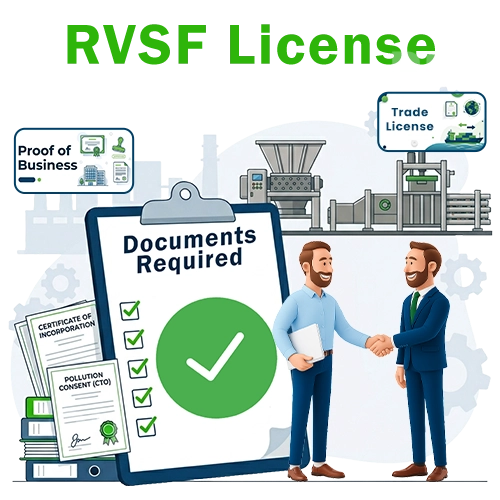
Documents Required for RVSF License in India
The applicant will need three types of documents to apply and maintain the RVSF license.
1. Business and Legal Documents
These documents establish the applicant's legal status and ownership of the proposed facility:
- Certificate of Incorporation of the company, LLP, society, or trust
- Permanent Account Number (PAN) of the entity
- GST Registration Certificate
- Aadhaar of the authorised signatory or key promoter
- Memorandum and Articles of Association (MoA and AoA) where applicable
- Land ownership documents or registered lease deed for the proposed RVSF site
- Authorisation letter for the nodal officer who will deal with MoRTH and the State Transport Department
- Detailed Project Report (DPR) prepared by a Chartered Accountant or qualified expert
2. Infrastructure and Approval Documents
These confirm that the facility meets all environmental, safety, and structural standards required under the Motor Vehicles Rules 2021:
- Approved Site Layout Plan and Building Plan from the Municipal Corporation or DTCP
- Land Use Conversion (CLU or ILU) certificate
- Pollution clearances from the State Pollution Control Board, including Consent to Establish (CTE) and Consent to Operate (CTO)
- Hazardous Waste Authorisation under the Hazardous Waste Management Rules, 2016
- Fire Safety NOC from the Fire Service Department
- Trade License and Shop and Establishment Registration
- List of tools, machinery, and equipment installed at the facility
- Workforce details, including trained dismantlers and safety personnel
- Bank Guarantee of Rs. 10 lakh in favour of the State Transport Department or MoRTH
- Compliance declaration with AIS-129 standards and CPCB environmental guidelines
RVSF License Fees in India
The fees for RVSF registration varies based on various factors including facility size, location, and state-specific requirements. The applicants are required to pay a government fee for the RVSF License during the application process. It is advisable to check the latest guidelines with authorities for the fee of RVSF registration.
| Purpose | Government Fees |
|---|---|
| Grant or renewal of Registration Certificate for automated testing station | INR 1,00,000 |
| Security Deposit / Bank Guarantee for Registration Certificate for Registered Vehicles Scrapping Facility | INR 10,00,000 |
Note: Professional fees for RVSF Approval starts from @ ₹49,999 (exclusive of GST)
Post-License Documents and Compliance Requirements
After the license is issued, the applicant must maintain the following on an ongoing basis:
- ISO 9001, ISO 14001, or ISO 45001 certification (to be obtained within 12 months of starting operations)
- Annual audit report uploaded on the VAHAN portal by 31 May each year
- Digital records of every scrapped vehicle in Form-3 maintained for 10 years
- Copies of every Certificate of Deposit (CoD) and Certificate of Vehicle Scrapping (CVS) issued
- Records of identity verification for every vehicle owner, retained for at least 6 months
- Quarterly returns to the State Pollution Control Board
- Monthly compliance updates uploaded to the NSWS and VAHAN portals
What is RVSF License?
A Registered Vehicle Scrapping Facility License (RVSF) is an official authorization issued by the Ministry of Road Transport and Highways (MoRTH) or the respective State Transport Department to businesses involved in the scrapping and recycling of motor vehicles in India. Without this license, a business cannot legally dismantle, scrap, or recycle end-of-life vehicles (ELVs).
The license operates under the Motor Vehicles (Registration and Functions of Vehicle Scrapping Facility) Rules, 2021, which set the eligibility criteria, infrastructure standards, environmental rules, and audit requirements that every RVSF must follow. Once registered, the facility receives an official RVSF number, gains access to the VAHAN database for vehicle de-registration and is authorized to issue two key documents to vehicle owners: the Certificate of Deposit (CoD) and the Certificate of Vehicle Scrapping (CVS).
In simple terms, an RVSF license is the legal foundation of any vehicle scrapping business in India. Having an RVSF will allow a facility to operate within the country's official recycling system, qualify for government incentives, partner with vehicle manufacturers and meet the environmental standards set by the Central Pollution Control Board (CPCB).
What is the Difference Between RVSF and ATS?
In short, ATS tells you whether a vehicle is fit to run or not, and RVSF takes over once the decision is finalized, i.e., the vehicle is unfit, retired, or end-of-life.
| Point of Comparison | Registered Vehicle Scrapping Facility (RVSF) | Automated Testing Station (ATS) |
|---|---|---|
| Full Form | Registered Vehicle Scrapping Facility | Automated Testing Station |
| Main Function | Scraps and recycles End-of-Life Vehicles (ELVs) | Tests fitness of vehicles using automated equipment |
| Governing Rules | Motor Vehicles Rules, 2021 (GSR 653(E)) | Central Motor Vehicles Rules, 2021 (GSR 652(E)) |
| Outcome of Service | Issues Certificate of Deposit (CoD) and Certificate of Vehicle Scrapping (CVS) | Issues Certificate of Fitness (CoF) |
| Issuing Authority | MoRTH and State Transport Department | MoRTH and State Transport Department |
| Vehicles Handled | Vehicles ready to be scrapped | Vehicles up for fitness renewal or scrapping decision |
| Common Output | Scrap metal, recycled parts, EPR certificates | Pass or fail report on roadworthiness |
| Investment Range | Rs. 2 crore to Rs. 14 crore (depending on capacity) | Rs. 2 crore to Rs. 5 crore (depending on capacity) |
Who Can Apply for an RVSF License in India?
- Legal entity status - The applicant must be a registered legal entity, such as a private limited company, public limited company, LLP, partnership firm, society, or trust . Individual proprietors are not eligible.
- Active certifications -The applicant must hold a valid Certificate of Incorporation, Permanent Account Number (PAN), and GST registration .
- Land in the right zone -The proposed facility must be located on land falling within the "Orange Category" industrial zone as classified by the Central Pollution Control Board (CPCB). This is mandatory under MoRTH guidelines.
- Adequate land area - The land must be large enough to support all required activities such as vehicle storage, depollution, dismantling, segregation, and waste management. Most operational RVSFs in India occupy between 2 to 10 acres, depending on capacity.
- Bank Guarantee -The applicant must submit a bank guarantee of Rs. 10 lakh in favour of MoRTH or the State Transport Department before registration.
- Cyber security readiness - Since the RVSF will be connected to the VAHAN database and the National Crime Records Bureau (NCRB), the applicant must have basic cybersecurity certification to access the central vehicle records.
- Compliance with AIS-129 standards - The proposed facility must be designed and equipped according to Automotive Industry Standard (AIS-129), which sets the technical and operational requirements for ELV recycling.
- Pollution clearances - The applicant must obtain a Consent to Establish (CTE) and Consent to Operate (CTO) from the State Pollution Control Board, along with a Fire Safety NOC and Building Plan Approval.
If the applicant meets these conditions, then he/she becomes eligible to apply for an RVSF license through the National Single Window System (NSWS) portal and the State Transport Department.
How Long Does It Take to Get an RVSF License?
The official decision on an RVSF license application is given within 60 days of submission, as per Rule 4 of the Motor Vehicles (Registration and Functions of Vehicle Scrapping Facility) Rules, 2021. However, the full process from start to license issuance usually takes 3 to 4 months, depending on how quickly the applicant secures pre-approvals like CTE, CTO, Fire NOC, and Building Plan Approval.
Here is the typical timeline:
| Stage | Time Required |
|---|---|
| Document preparation and DPR | 2 to 3 weeks |
| Pre-approvals (CTE, CTO, Fire NOC, Building Plan) | 4 to 6 weeks |
| NSWS application submission and physical file submission | 1 week |
| State Transport Department inspection and verification | 3 to 4 weeks |
| Issuance of RVSF Registration Certificate (Form 1A) | 1 to 2 weeks |
| Total estimated time | 3 to 4 months |
Delays usually happen at the pre-approval stage, especially while securing pollution clearances. So working with experts like Professional Utilities ensures that every document you submit is factually right and you don’t have to reapply or rework your application.
Benefits of RVSF License in India
The RVSF registration provides several advantages to vehicle scrappage facility owners:
- Financial Incentives: Vehicle owners get 25% (private) and 15% (commercial) road tax concessions, registration fee waivers, and about 5% OEM discounts on new vehicles when scrapping old ones at RVSFs.
- Revenue Streams: RVSFs earn income from scrapping fees, selling scrap metals, reusable parts, OEM contracts, and exports. GST of 18% applies, with mandatory registration above certain turnover limits.
- Regulatory Compliance: Facilities must follow pollution control, depollution, and recycling rules, including CPCB and MoRTH guidelines, ensuring safe dismantling and yearly audits.
- Environmental Benefits: Promote green recycling, safe disposal of hazardous waste , cleaner cities, and resource recovery. Some states provide subsidies for eco-friendly operations.
- Global Recognition: Certification ensures compliance with international standards, aiding OEM contracts and GST-free scrap exports, enhancing business opportunities.
Vehicle Categories for Scrapping (RVSF rules)
Under RVSF rules, Vehicles are grouped under various categories for scrapping on the basis of multiple factors, such as Size, type, age etc of vehicle.
L - Two/Three-wheelers & Small Quads
- L1 - Small two-wheelers: Top speed up to ~45 km/h. Example: moped, basic e-scooter.
- L2 - Regular two-wheelers : Larger than L1 (standard scooters and motorcycles).
- L5 - Motorised three-wheelers: Example: auto-rickshaw, 3-wheel goods carrier.
- L7 - Quadricycle: Small four-wheeler, lighter than a car. Example: Bajaj Qute.
M - Passenger Vehicles (4 or more wheels)
- M1 - Cars / SUVs / MPVs: Up to 8 passenger seats (driver excluded).
- M2 - Minibuses: 9+ seats and GVW ≤ 5 tonnes.
- M3 - Big buses: 9+ seats and GVW> 5 tonnes.
N - Goods / Commercial Vehicles (4 or more wheels)
- N1 - Small goods vehicles: GVW ≤ 3.5 tonnes (pick-ups, small LCVs).
- N2 - Medium trucks: 3.5–12 tonnes GVW.
- N3 - Heavy trucks: > 12 tonnes GVW.
Upon identification of the correct vehicle category, it becomes easier for the organisation to start the RVSF application process & ensure proper compliance with right documentation.
Vehicle Scrapping Process Flow
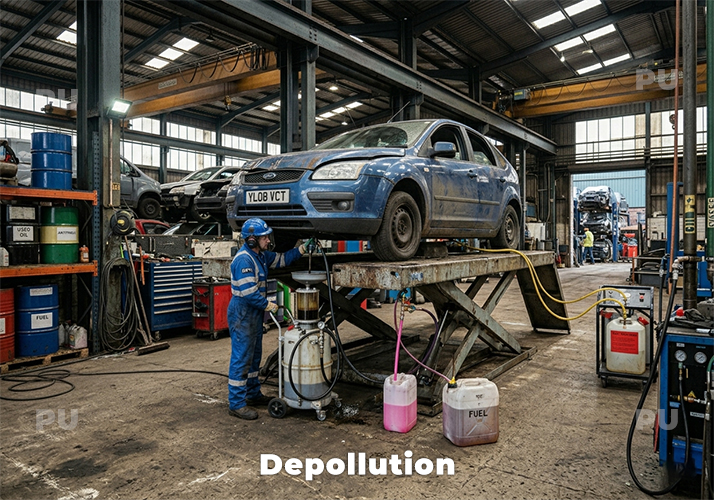
Scrapping a vehicle in India is not a one-step job. It moves through several stages, and the government keeps track of each one Here is how the process works at an authorised RVSF.
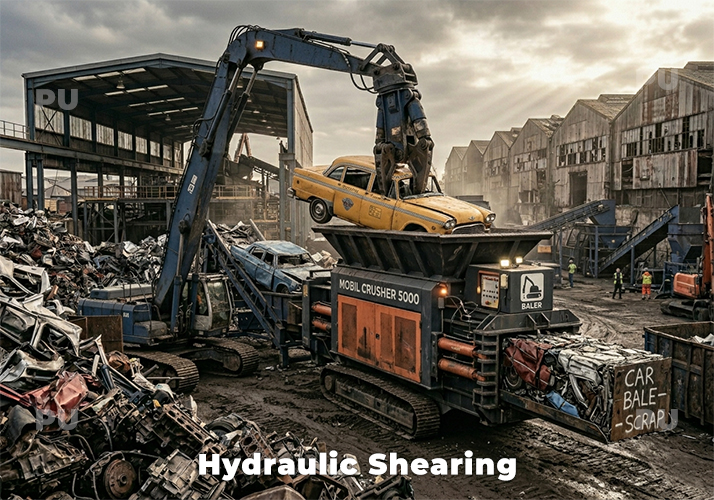
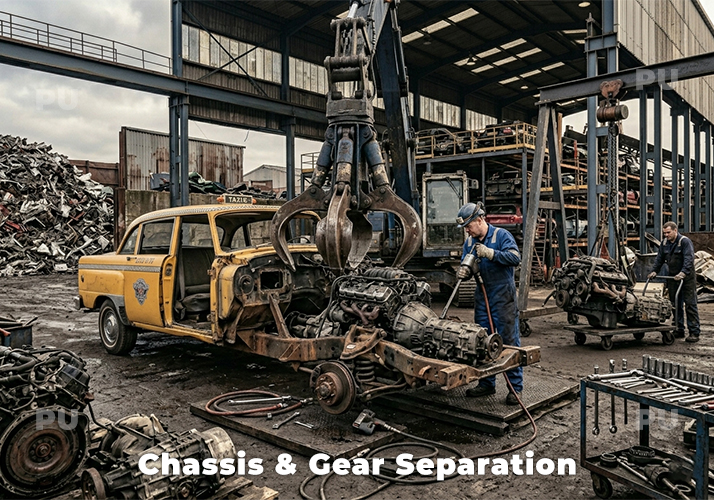
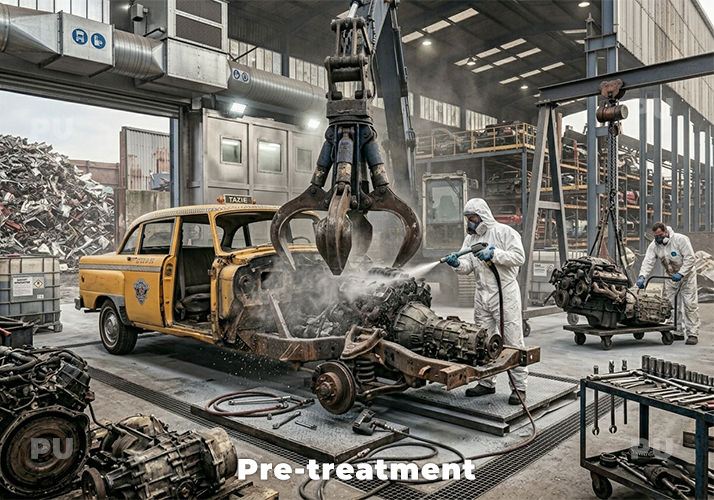
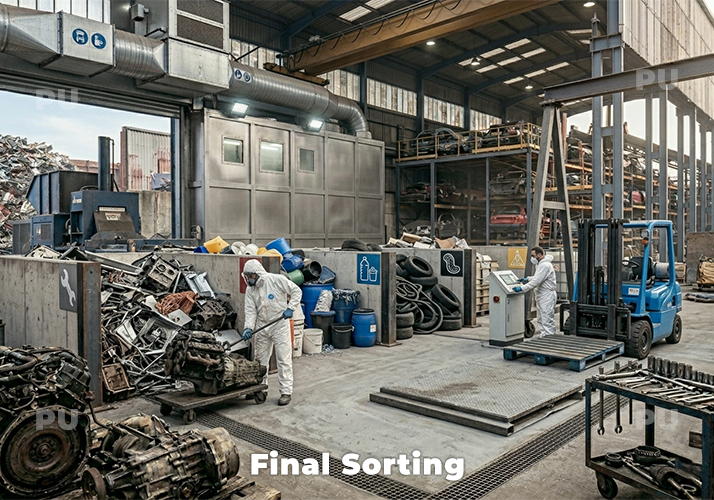
-
01 Depollution - Remove oil, fuel, coolants
-
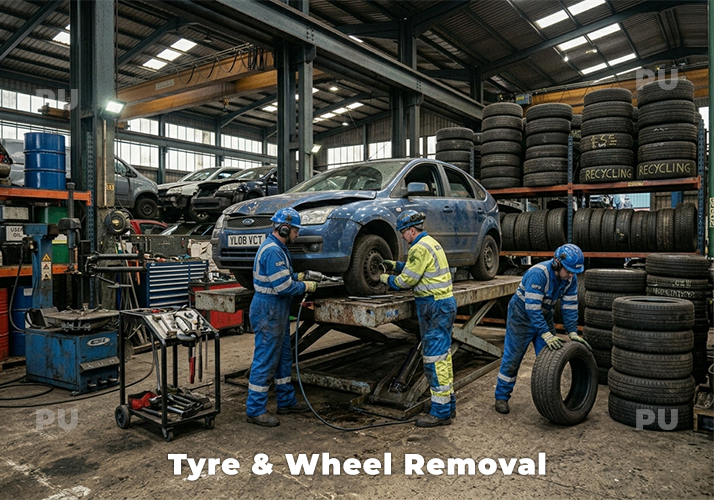
02 Tyre & Wheel Removal - For reuse or recycling
-
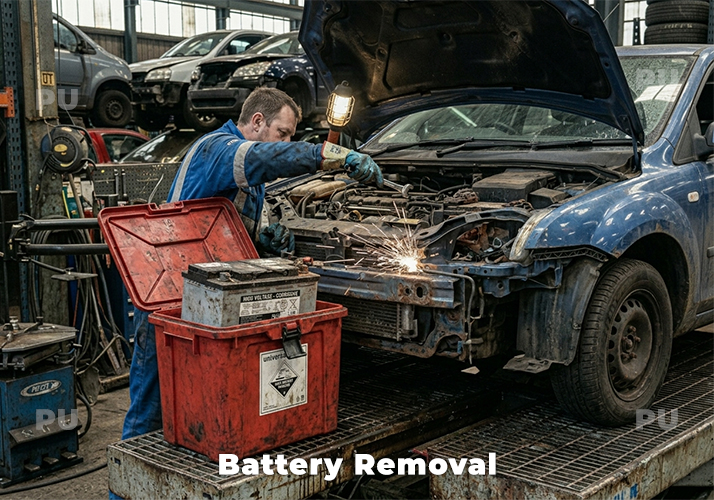
03 Battery Removal - For proper disposal
-
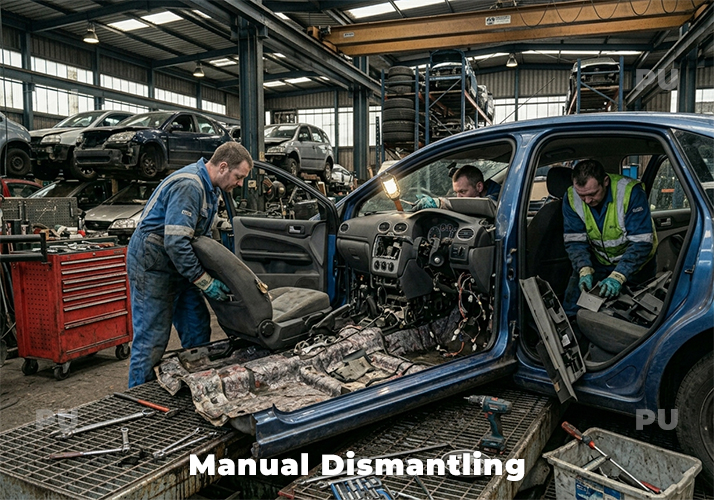
04 Manual Dismantling - Interiors and parts
-
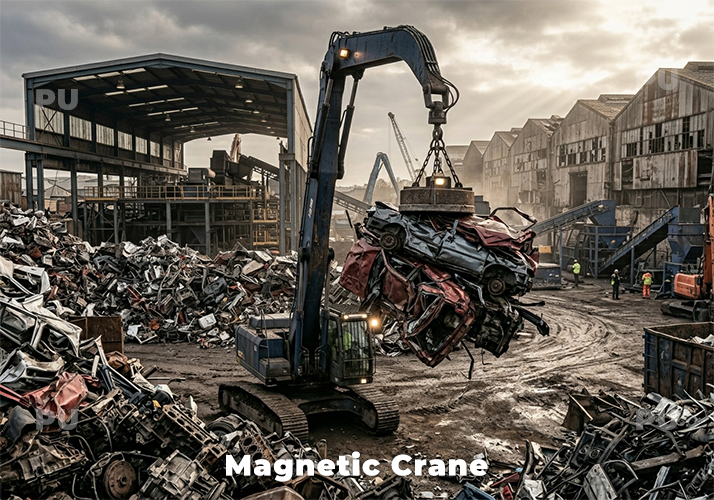
05 Magnetic Crane - Separate ferrous metals
-
06 Hydraulic Shearing - Break metal frames
-
07 Chassis & Gear Separation - Disassemble parts
-
08 Pre-treatment - Surface paint removal
-
09 Final Sorting - Scrap valuation & recycling
Prior Approval Required for Obtaining an RVSF License
Before setting up a vehicle scrapping facility, getting prior approval is an important first step. This approval ensures that your business meets all required guidelines and legal standards. Understanding this requirement helps you avoid delays and move forward with the licensing process smoothly.
| Approval / License | Authority |
|---|---|
| Trade License / Shop & Establishment & Labour License | Labour Department |
| Hazardous Waste Authorization | State Pollution Control Board (SPCB) |
| Consent to Establish / Consent to Operate | State Pollution Control Board (SPCB) |
| Site Layout Approval / Building Plan Approval & Completion Certificate | Municipal Corporation / DTCP |
| Land-use Conversion ( CLU / ILU) | Municipal Corporation / DTCP |
| Fire Department | Fire Service via Municipal Authority |
| Detailed Project Report / CA Certificate | NA |
Validity and Renewal of RVSF License
An RVSF license in India is valid for an initial period of 10 years from the date of issue, as per Rule 5 of the Motor Vehicles (Registration and Functions of Vehicle Scrapping Facility) Rules, 2021. After this period, the license can be renewed for another 10 years at a time, given the facility complies with all the set rules and regulations.
Renewal Process and Conditions
To Renew the RVSF License, the applicant must :
- Apply for renewal at least 90 days before the expiry date through the same NSWS portal
- Submit updated documents, including the latest CTE, CTO, Fire NOC, and audit reports
- Maintain a clean compliance record under the Motor Vehicles Rules 2021, Hazardous Waste Rules 2016, and CPCB guidelines
- Pay the prescribed renewal fee and submit a fresh Bank Guarantee, if required by the State Transport Department
What Happens on Default
If the RVSF is found to be in default of the rules at the time of renewal, such as failing audits, missing annual reports, or violating environmental norms, the State Transport Commissioner may either issue a show-cause notice, refuse renewal, or cancel the existing license. In such cases, the RVSF can fix the deficiencies and reapply or file an appeal with the higher transport authority.
Revenue Model and Profit Potential of an RVSF
A lot of applicants have this question: how much can they actually earn from this business? The answer is not just a specific number because India has nearly 2.3 crore End-of-Life Vehicles (ELVs) projected by 2030, and current RVSFs handle only a small share of this volume, which leaves a significant market gap for new operators.
Initial Investment Required
Setting up an RVSF requires capital based on the size of the facility:
- Small RVSF (2,000 to 3,000 vehicles per year): Rs. 2 to 3 crore
- Medium RVSF (10,000 vehicles per year): Rs. 5 to 8 crore
- Large RVSF (20,000+ vehicles per year): Rs. 12 to 15 crore (NITI Aayog estimate: around Rs. 14 crore for a 20,000-vehicle capacity)
This investment covers land, machinery, depollution units, infrastructure, IT systems, fire safety, approvals, and the Rs. 10 lakh bank guarantee.
Main Revenue Streams of an RVSF
A licensed RVSF earns money from five main sources:
- Scrap metal sales (steel, aluminium, copper)—the largest revenue source, contributing 60% to 70% of total income
- Sale of reusable parts like engines, tyres, batteries, and electronic components
- OEM tie-ups with vehicle producers like Tata, Maruti, and Mahindra for take-back contracts
- EPR certificate trading under ELV Rules 2024 and 2025, where producers must buy scrappage certificates from RVSFs to meet annual targets
- Vehicle scrapping fees from individual customers, government departments, and bulk fleet owners
Profit Margin and Payback Period
- perating margin : 15% to 20% on average
- Payback period : 3 to 4 years for an efficiently run facility, longer if utilisation stays below 50%
- GST input credit + state subsidies reduce effective capital expense by 10% to 15% in states like Odisha, Assam, and Gujarat
- OEMs typically pay 4% to 6% of the new vehicle's ex-showroom price as scrap value, creating a steady B2B income channel
Why the Profit Pool Will Grow Through 2030
With government and PSU vehicles older than 15 years now mandatorily scrapped through RVSFs, the RVSF industry will grow by an estimated USD 11 billion in 2025 to USD 27.5 billion by 2032 at a 13% to 14% CAGR. So investing in this business will be a smart and profitable choice.
Penalties for Operating Without an RVSF License in India
If the applicant is running his/her vehicle scrapping business without having an RVSF license in India, then they will have to face several penalties under the Motor Vehicles Act 1988, the Environment Protection Act 1986, and the End-of-Life Vehicles Rules 2024 and 2025.
- Environmental Compensation: Imposed by the CPCB or State Pollution Control Board based on the damage caused
- Forfeiture of the Rs. 10 lakh Bank Guarantee submitted during registration
- Cancellation or suspension of the license, up to 5 years for false information
- Immediate closure orders under pollution control laws
- Loss of EPR eligibility, which cuts off the biggest long-term income stream from vehicle producers
NOTE: Operators can file an appeal with the Appellate Authority within 30 days if they wish to contest the penalty. In short, setting up an RVSF correctly the first time is far cheaper than facing penalties, business shutdown, or losing the right to operate altogether.
Professional Utilities: India's Trusted Experts for RVSF License Registration
The RVSF industry in India is at a turning point. With more than 129 facilities operational and the government planning one in every district, the next few years will decide who leads this sector. The opportunity is there and still growing with the policy framework firmly in place. Only those who act now and move correctly will benefit from this
But setting up an RVSF involves multiple approvals, technical compliance, environmental clearances, and ongoing audits. One mistake at any stage can delay the license by months or even lead to rejection. This is exactly where RVSF License Registration Consultant services from Professional Utilities come in. Our team handles your RVSF license application from start to finish, including documentation, NSWS filing, inspection readiness, and post-license compliance.
If you are planning to set up an RVSF in India, do not let paperwork or compliance gaps slow you down. Visit our website or call our team today and let our experts manage the complete process while you focus on building a future-ready scrapping business.
FAQ’s On RVSF License Registration
Who issues the RVSF Licence in India?
The Ministry of Road Transport and Highways (MoRTH) and the respective State Transport Department issue RVSF licences through the NSWS portal under SCOMET-aligned procedures.
How long does it take to get an RVSF Licence?
The official decision is given within 60 days of application. The complete setup, including pre-approvals like CTE, CTO, and Fire NOC, usually takes 3 to 4 months.
What is the validity of an RVSF Licence?
An RVSF Licence is valid for 10 years from the date of issue and can be renewed for another 10 years at a time, subject to compliance with all rules.
How much does it cost to get an RVSF Licence?
The total cost includes a government fee of Rs. 1 lakh, a bank guarantee of Rs. 10 lakh, and a professional fee of Rs. 5 lakh charged by Professional Utilities for end-to-end registration support.
Can private companies apply for an RVSF Licence?
Yes. Private Limited Companies, LLPs, Public Limited Companies, Partnership Firms, Societies, and Trusts can apply. Individual proprietors are not eligible.
Is GST registration mandatory for an RVSF?
Yes. GST Registration is mandatory for every RVSF, since scrap metal sales, parts sales, and EPR transactions are taxable activities
Speak Directly to our Expert Today

Reliable

Affordable

Assured
Industries Served by
Professional Utilities

Apparels

Footwear

Furniture

Gems and Jewellery

Tourism & Hospitality

Consumer Electronics

Chemicals

Telecom

Oils & Gas

Hotel

Railways

Liquor

Health & Medical

Food Processing

Dangerous/ Haz. Goods

Tea & Coffee

Capital Goods

Recycling

Rubber

NGOs

Silk

Handloom

IT & BPM

Steel

Automobile

Tobacco

Constructions


Testimonials
"Explore how Professional Utilities have helped businesses reach new heights as their trusted partner."





It was a great experience working withProfessional Utilities. They have provided the smoothly. It shows the amount of confidence they are having in their field of work.

Atish Singh


It was professional and friendly experience quick response and remarkable assistance. I loved PU service for section 8 company registration for our Vidyadhare Foundation.

Ravi Kumar
I needed a material safety data sheet for my product and they got it delivered in just 3 days. I am very happy with their professional and timely service. Trust me you can count on them.

Ananya Sharma
Great & helpful support by everyone. I got response & support whenever I called to your system. Heartly thanx for Great & Super Service. Have a Great & Bright future of team & your company.

Prashant Agawekar
Thank you so much Professional Utilities team for their wonderful help. I really appreciate your efforts in getting start business. Pvt Ltd company registration was smooth yet quick.
Abhishek Kumar
I applied for Drug licence and company registration and their follow-up for work and regular updates helped me a lot. They are happily available for any kind of business consultancy.

Vidushi Saini
Great experience went to get my ITR done, process was quite convenient and fast. Had a few queries, am happy about the fact those people explained me all things I wanted to know.

Taniya Garyali
Great services provided by Professional Utilities. They are best in this industry and the best part is their prices are so affordable. Kudos to you. Now you guys are my full-time consultant.

Aftab Alam
Trusted By