Get BIS Certification for Switch Gear & Control Gear

4.9


BIS Certification for All Types of Switchgear & Control Gear
Switchgear and control gear equipment have a very significant function in electrical engineering especially electric energy power systems where power is over 1000 volts. These devices have significant importance for managing, guarding, and separating electric circuits, and they are used to supply electricity safely and efficiently in different applications, including industrial plants or urban utilities. To answer the emerging need in India for secure and high-capacity electrical systems, safety and performance standards are crucial to maintain.
The manufactured equipment as well as the high voltage equipment are regulated with great care by the Bureau of Indian Standards known as BIS, and it has provided certain norms for manufacturing test tables and certification. Adherence to the BIS standards does more than improve the safety and reliability of electrical products, it creates consumer confidence.
This series of blogs discusses different types of switchgear and control gear equipment manufacturing processes, performance characteristics, test procedures, and a very important aspect of BIS certification. By covering these aspects, we expect to give readers an insight into how the systems function and the legal structures that enable secure deployment of these systems in the growing electrical network in India.
BIS Registration Sample
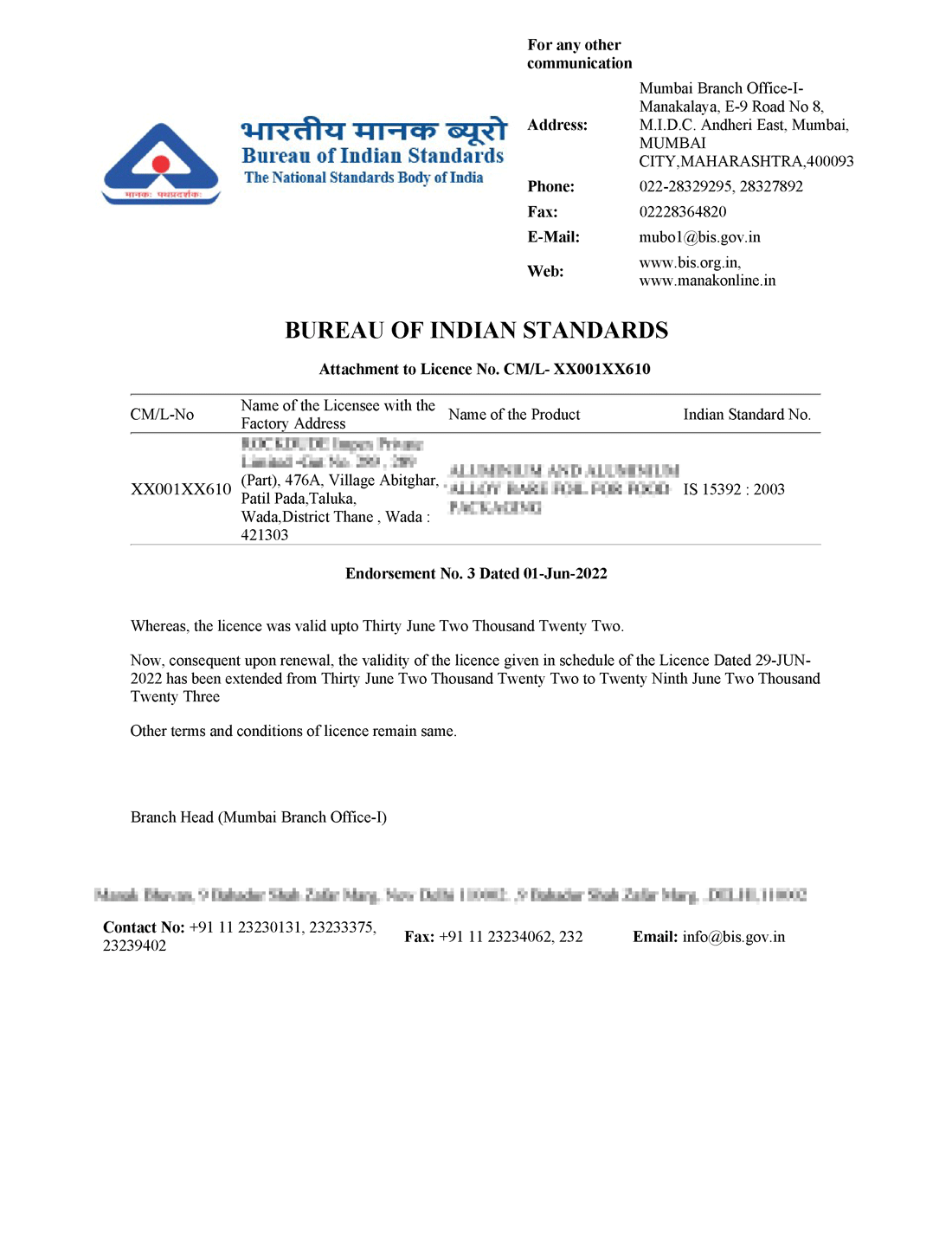
Table of Content
- What is all Type of Switch Gear & Control Gear
- Manufacturing Process of Switch Gear and Control Gear
- Performance Requirements and Test Methods for Switch Gear and Control Gear
- Testing Methods for Switch Gear and Control Gear
- Laboratory Requirements for Switch Gear and Control Gear
- Labeling and Marking Requirements for Switch Gear and Control Gear
- Documents Required for BIS Certification of Switch Gear and Control Gear
- Process of BIS Certification for Switch Gear and Control Gear
- Importance of BIS Certification for Switch Gear and Control Gear
- Conclusion
- Frequently Asked Questions (FAQs)

What is All types of switch gear and control gear?
With reference to equipment used for switchgear and control gear where the operating voltage of electric power systems exceeds 1000 volts, such equipment is very vital for the safe and efficient control of electrical power systems. These devices are intended for controlling, as well as protecting and insulating electrical equipment. The primary types of switchgear and control gear can be classified into the following categories:
High-Voltage Switchgear: This encompasses equipment that is for voltages above 1 kV, normally not exceeding 52 kV. Key components include:
- Circuit Breaker: These are apparatus that can shut a flow off automatically whenever a fault condition exists in the system.
- Disconnectors: Isolating type of switch which is mainly mechanical in nature and which interrupts a portion of the electrical circuit.
- Fuses: Load-breaking devices that get melted in case of occurrence of overload or short circuit.
Gas-Insulated Switchgear (GIS): This type employs gas, normally Sulphur Hexafluoride (SF6), for insulation thus offering compact designs for city applications.
Metal-Enclosed Switchgear: These assemblies encompass all components in a metal cabinet in a bid to enhance safety and defend the assemblies from influences of the external environment.
Air-Insulated Switchgear (AIS): It uses air as the insulating material usually employed in open-air applications.
Control Gear: Control equipment is also comprised of equipment that controls the functioning of circuits for power.
- Contactors: used to make circuits either join or break due to electrical current.
- Relays: electromechanical switches used in the operation of circuits with an electric signal.
Assemblies and Sub-Assemblies : These are other forms of the above-mentioned components intended for carrying out specific tasks in a larger system.
Regarding these products in India, it is obligatory for them to fulfill the requirements of the Bureau of Indian Standards (BIS) in order for such products to be safe, reliable, and efficient in their use.

Manufacturing Process of Switch Gear and Control Gear
The manufacturing process for high-voltage switchgear and control gear involves several critical steps:
- Design and Engineering: To begin with, initial designs are drawn with references to the existing ones in the field (IS/IEC among others), with respect to voltage ratings, environments, and safety aspects, among others.
- Material Selection: Superior quality material is chosen, to withstand mechanical stress and voltage beyond the standard values of AC current systems. Some of the everyday materials used are copper for conductor parts and various insulating materials.
- Component Fabrication: Each substation unit - circuit breaker, disconnector, and enclosure - are precision manufactured through high-technology machining processes.
- Assembly: Assemblies include complete switchgear assemblies also known as power control units. This may refer to the combining of various sub-assemblies such as control panels and protection devices.
- Testing: Each unit is tested comprehensively to meet the standard of requirements before being mobilized for installation.
- Quality Control: These integrity checks are conducted on a daily and shift basis to ensure that the products produced meet the BIS certification standard.
Performance Requirements and Test Methods for Switch Gear and Control Gear
Performance requirements for switchgear and control gear operating above 1000 volts include:
Electrical Performance:
- Insulation resistance
- Dielectric strength
- Short circuit line withstand strength
Mechanical Performance:
- Mechanical endurance
- Reliability of the operating mechanism
Thermal Performance:
- Temperature rise under load conditions
Testing methods include:
- Routine Tests: Carried out on each unit to ascertain some fundamental characteristics of their operations.
- Type Tests: Completed on samples yielding a representative population to ensure the products complied with design requirements.
- Special Tests: Other tests can be performed depending on the application requirement or for a particular environment.
Testing Methods for Switch Gear and Control Gear
Testing methods for high-voltage switchgear include:
Insulation Resistance Testing
Another measure of the insulation resistance of the switchgear components with the help of a megohmmeter.
High-Potential Testing (Dielectric Testing)
Imposes high voltage across isolation in order to test the insulation.
Short-Circuit Testing
Serves to the conditions that may cause faults in order to estimate the effectiveness of circuit breakers and other types of protective devices.
Temperature Rise Testing
Supervises temperature rise during steady state, under load conditions.
They make sure that the elements are capable of performing the service demand that is expected of them without failure.
Laboratory Requirements for Switch Gear and Control Gear
To conduct testing on All types of switch gear and control gear equipment operating at voltages exceeding 1000 volts and (or) their assemblies /sub-assemblies /components, laboratories must adhere to specific requirements:
- Equipment: State-of-the-art testing equipment like tensile testing machines, spectrometers, and ultrasonic testing gadgets should be included.
- Qualified Personnel: Technicians have to understand and know additional testing techniques and protocols to conduct efficient tests.
- Quality Control Procedures: The applying organization should ensure quality assurance to enhance the reliability of the tested samples in laboratories.
Labeling and Marking Requirements for Switch Gear and Control Gear
Labeling and markings are fundamental requirements of BIS standards regarding specifications for All types of switch gear and control gear equipment operating at voltages exceeding 1000 volts and (or) their assemblies /sub-assemblies /components. Each product must include:
- Manufacturer's Name or Trademark: In a manner that tells the consumer who produced it with clarity, means everything is right.
- ISI Mark: The ISI mark has to be affixed prominently on the product in case the product has been certified to conform to Indian standards.
- Material Information: Material should be mentioned along the labels that the footwear is made from and any other information concerning the safe usage of the product.
- Packaging Requirements: It is also important to label the packaging with the product type and care instructions so that the customers can maintain the product for the longest time.
Documents Required for BIS Certification of Switch Gear and Control Gear
The following are the documents required for BIS Certification:
| General Documents | Technical Documents |
|---|---|
| Business License | Plant Layout |
| Trademark License | List of Manufacturing Equipment |
| Application Form | Manufacturing Process Flow Chart |
| Authorization Letter | Product Literature |
| Laboratory Test Reports | List of testing equipment and machinery |
| MSME certificate | Product’s technical Specification |
| List of calibration certificate |
Process of BIS Certification for Switch Gear and Control Gear
The BIS certification process for All types of switch gear and control gear equipment operating at voltages exceeding 1000 volts and (or) their assemblies /sub-assemblies /components.
Step 1: Application Submission
Applications are filled including relevant documents that outline the production processes of the manufacturers.
Step 2: Factory Inspection
A BIS officer pays a visit to the manufacturing company in order to assess the levels of compliance with set regulations.
Step 3: Product Testing
The samples from the production batches are analyzed at the BIS-accredited laboratories.
Step 4: Issuance of License
As a result of the evaluation of these facilities and products, BIS grants permission to the manufacturers to use the ISI mark on their products.
Step 5: Surveillance Audits
To sustain the standards practice, normal assertions are carried out.
This is a process that manufacturers need to understand so that they can get an efficient certification.
Importance of BIS Certification for Switch Gear and Control Gear
BIS certification is crucial for several reasons:
- Market Access: It shall be marked with the ISI mark, as it is compulsory for any manufacturer who wants all types of switchgear and control gear equipment operating at voltages exceeding 1000 volts and (or) their assemblies / sub-assemblies / components to be sold in India. This means that without this certification, manufacturers cannot sell their products in the market.
- Consumer Safety: Certification means that the products have to conform to given standards in order to prevent the consumer from using dangerous products.
- Quality Assurance: The BIS Certificate process helps ensure the quality standards of the products as it covers quality control aspects of the products.
- Regulatory Compliance: The BIS certification acts as an asset to manufacturers since it avails them of the legal standards that are accepted by the government, hence saving them from legal troubles.
- Brand Credibility: An ISI mark adds value to the business by providing consumers confidence that they are dealing with products that meet the nation’s quality standards.
- Environmental Considerations: The BIS, in its regulations, has put forward specific measures to restrict the use of some dangerous chemicals when producing products related to environmental effects in the industry.
Conclusion
Switchgear and control gear devices working at voltage levels of more than 1000 volts are used extensively today for maintaining a safer electrical supply chain in India. BIS standards can only be met by subjecting the products to adequate testing, documentation, and certification processes and manufacturers interested in marketing their products within the country can only wish to meet these standards.
The emphasis placed on quality promises not only safety but also consumers’ confidence regarding electrical equipment to boost a better-equipped physical infrastructure that can feed India’s increasing power requirements.
Frequently Asked Questions (FAQs)
What documents are required for BIS Certification of Pyridine?
For BIS Certification of Pyridine, the required documents include product specifications, safety data sheets, manufacturing process details, factory licenses, test reports, and an authorization letter. To streamline the process, Pyridine BIS Certification offers complete assistance for documentation and application submission.
What is the difference between switchgear and controlgear?
Low, medium, and high voltage switchgear is used to distribute electricity safely. Low and medium voltage controlgear is mainly used in industries to protect machines—especially electric motors—from power surges, short circuits, and faults. It also helps with basic functions like starting and stopping equipment.
What’s the reason for the BIS certification?
Clients can prove their product meets the standard recognized by the Bureau of Indian Standards (BIS) hence protecting the consumer and enhancing product reliability.
Which paper and performance tests are needed to complete the certification process?
Some of the tests include insulation resistance tests, dielectric tests, short circuit tests, temperature rise tests, and so on.


Testimonials
"Explore how Professional Utilities have helped businesses reach new heights as their trusted partner."





It was a great experience working withProfessional Utilities. They have provided the smoothly. It shows the amount of confidence they are having in their field of work.

Atish Singh


It was professional and friendly experience quick response and remarkable assistance. I loved PU service for section 8 company registration for our Vidyadhare Foundation.

Ravi Kumar
I needed a material safety data sheet for my product and they got it delivered in just 3 days. I am very happy with their professional and timely service. Trust me you can count on them.

Ananya Sharma
Great & helpful support by everyone. I got response & support whenever I called to your system. Heartly thanx for Great & Super Service. Have a Great & Bright future of team & your company.

Prashant Agawekar
Thank you so much Professional Utilities team for their wonderful help. I really appreciate your efforts in getting start business. Pvt Ltd company registration was smooth yet quick.
Abhishek Kumar
I applied for Drug licence and company registration and their follow-up for work and regular updates helped me a lot. They are happily available for any kind of business consultancy.

Vidushi Saini
Great experience went to get my ITR done, process was quite convenient and fast. Had a few queries, am happy about the fact those people explained me all things I wanted to know.

Taniya Garyali
Great services provided by Professional Utilities. They are best in this industry and the best part is their prices are so affordable. Kudos to you. Now you guys are my full-time consultant.

Aftab Alam
Trusted By