Get BIS Certificate for Lauric Acide

4.9


BIS Certification for Lauric Acid - Process, Fees & Documents
Lauric acid a saturated fatty acquiring prevalent in coconut and palm kernel oil has extensive application across many sectors including the cosmetic, food, and drug industries. Because of its ability to possess antimicrobial properties and improve skin permeability, the compound is widely incorporated in various products.
In India Bureau of Indian Standards has exercised a Quality Control Order (QCO) to control the production and import of Lauric Acid in the market with the standard quality. While these regulations apply fundamental safeguards to consumers, they also enhance the capability of Indian manufacturers to gain a competitive edge in the international market. Unlike the previous QCO which was effective up to October 24, 2024, the new QCO proposes a series of testing techniques, the marking of products, and better documentation for manufacturers wishing to obtain BIS certification.
This blog will further discuss about types of manufacturing, performance characteristics, testing procedures, laboratories involved, labeling regulations, and important documents for acquiring BIS certification of Lauric Acid in India. Thus, public and legal awareness of these aspects will enable stakeholder organizations to meet the required legal requirements and improve the quality of products and services promoted to consumers.
BIS Registration Sample
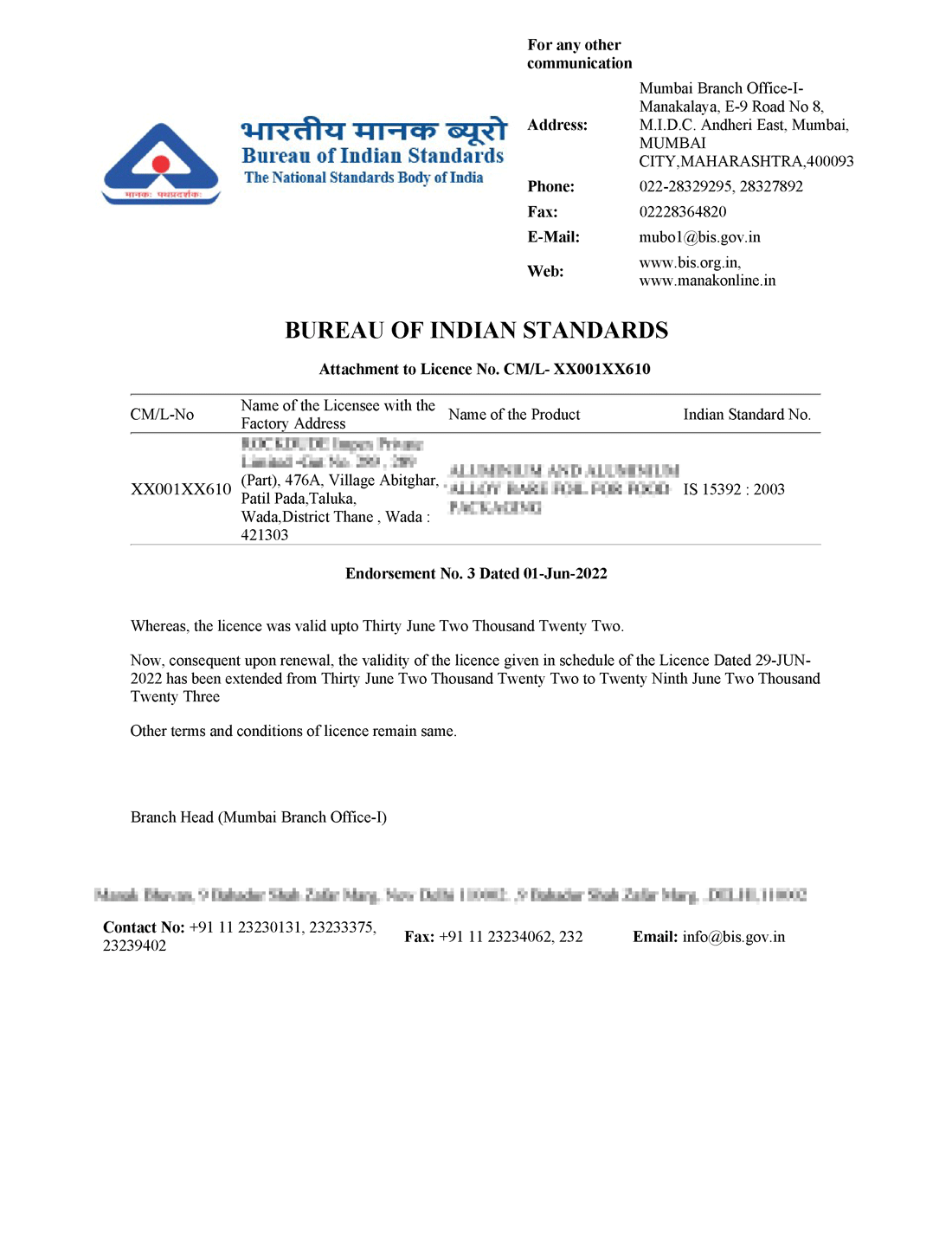
Table of Content
- What is the Lauric Acid?
- Manufacturing Process for Lauric Acid?
- Performance Requirement and Test Method for Lauric Acid
- Testing Methods for Lauric Acid
- Laboratory Requirements for Lauric Acid
- Labeling and Marking Requirement for Lauric Acide
- Documents Required for Lauric Acide BIS Certification
- Process of BIS Certification for Lauric Acid
- Importance of BIS Certification for Lauric Acid
- Conclusion
- Frequently Asked Questions (FAQs)

What is the Lauric Acid?
Lauric acid is a simple saturated fatty acid located in different natural products, including coconut oil and palm kernel oil. It is in use in the clarification of soaps, cosmetics, and food products because of its antimicrobial qualities and as an absorption promoter. The Indian law through the Bureau of Indian Standards (BIS) has put in place Quality Control Orders (QCOs) that control the manufacture and import of Lauric Acid products into India with reference to certain qualities and standards.
The recent change made to the QCO for Lauric Acid from October 24, 2024, showed clearly how quality measures must be strengthened to protect the chemical and petrochemical companies’ products. Pursuant to the objectives of consumer protection and to boost the competency of Indian manufacturers on the international market, this regulation has been set.

Manufacturing Process for Lauric Acid?
Most Natural Lauric Acid producers employ the extraction of oil from coconuts or palm kernels to produce the necessary raw material for the subsequent chemical process. The key steps include:
- Extraction: It is obtained from coconut or palm kernel, through mechanical presses or solvent extraction techniques.
- Hydrolysis:In the refining process the crude oil is subjected to hydrolysis which will separate glycerol from fatty acids.
- Fractionation:Lauric Acid is extracted from the fatty acids by fractionation and the latter is purified through distillation or crystallization.
- Refinement: In the final stage through the specific chemical process the output is purified to meet BIS standards.
This process not only maximizes yield but also makes sure that Lauric Acid fulfills the specifications of purity and quality as stipulated by BIS.
Performance Requirement and Test Method for Lauric Acid
The performance requirements for Lauric Acid products under BIS standards focus on several key parameters:
- Purity: There always has to be a minimum purity threshold that has to be cherished, normally over 95%.
- Total Fatty Acids:The total fatty acid constituents should be estimated by titration techniques.
- Free Fatty Acids: Analysis of free fatty acids is important because their level is excessive and may impact the quality of the product.
- Iodine Value: This explains the extent of unsaturation in the fatty acids; the lower the iodine value the better for Lauric Acid.
Testing methods include gas chromatography for fatty acid composition analysis, titration for free fatty acid content, and other standardized laboratory techniques to ensure compliance with IS 10931:2023.
Testing Methods for Lauric Acid
Here are given some testing methods for Lauric Acid:-
Gas Chromatography (GC):
Aids in the study of the elements of fatty acids.
Titration Methods:
Used in the determination of the free fatty acid contents.
Iodine Value Determination:
Carried out using specific reagents as a means of determining levels of unsaturation.
Physical Property Tests:
The techniques include the determination of melting point and viscosity.
Both of the methods employed have to meet set protocols as laid down by BIS in order to ensure that the results obtained are accurate and /or As accurate.
Laboratory Requirements for Lauric Acid
To conduct testing on Lauric Acid effectively, laboratories must adhere to specific requirements:
- Equipment:should have state-of-art testing equipment like tensile testing machines, and spectrometers, ultrasonic testing gadgets.
- Qualified Personnel:Technicians have to understand and know additional testing techniques and protocols to conduct efficient tests.
- Quality Control Procedures: The applying organization should ensure quality assurance to enhance the reliability of the tested samples in laboratories.
Labeling and Marking Requirement for Lauric Acide
Labeling and markings are fundamental requirements of BIS standards regarding Specifications for Lauric Acid. Each product must include:
- Manufacturer's Name or Trademark: In a manner that tells the consumer who produced it with clarity, means everything is right.
- ISI Mark: The ISI mark has to be affixed prominently on the product in case the product has been certified to conform to Indian standards.
- Material Information: Material should be mentioned along the labels that the footwear is made from and any other information concerning the safe usage of the product.
- Packaging Requirements: It is also important to label the packaging with the product type and care instructions so that the customers can maintain the product for the longest time.
Documents Required for Lauric Acide BIS Certification
The following are the documents required for BIS Certification:
| General Documents | Technical Documents |
|---|---|
| Business License | Plant Layout |
| Trademark License | List of Manufacturing Equipment |
| Application Form | Manufacturing Process Flow Chart |
| Authorization Letter | Product Literature |
| Laboratory Test Reports | List of testing equipment and machinery |
| MSME certificate | Product’s technical Specification |
| List of calibration certificate |
Process of BIS Certification for Lauric Acid
The BIS certification process for Lauric Acid involves several steps: several steps:
Step 1: Application Submission
Applications are filled including relevant documents that outline the production processes of the manufacturers.
Step 2: Factory Inspection
A BIS officer pays a visit to the manufacturing company in order to assess the levels of compliance with set regulations.
Step 3: Product Testing
The samples from the production batches are analyzed at the BIS-accredited laboratories.
Step 4: Issuance of License
As a result of the evaluation of these facilities and products, BIS grants permission to the manufacturers to use the ISI mark on their products.
Step 5: Surveillance Audits
To sustain the standards practice, normal assertions are carried out.
This is a process that manufacturers need to understand so that they can get an efficient certification.
Importance of BIS Certification for Lauric Acid
Here are given some Importance of BIS Certification for Lauric Acide:-
- Market Access: It shall be marked with the ISI mark, as it is compulsory for any manufacturer who wants all types of switchgear and control gear equipment operating at voltages exceeding 1000 volts and (or) their assemblies / sub-assemblies / components to be sold in India. This means that without this certification, manufacturers cannot sell their products in the market.
- Consumer Safety: Certification means that the products have to conform to given standards in order to prevent the consumer from using dangerous products.
- Quality Assurance: The BIS certification process helps ensure the quality standards of the products as it covers quality control aspects of the products.
- Regulatory Compliance: The BIS certification acts as an asset to manufacturers since it avails them of the legal standards that are accepted by the government, hence saving them from legal troubles.
- Brand Credibility: An ISI mark adds value to the business by providing consumers confidence that they are dealing with products that meet the nation’s quality standards.
- Environmental Considerations: The BIS, in its regulations, has put forward specific measures to restrict the use of some dangerous chemicals when producing products related to environmental effects in the industry.
Conclusion
The new Quality Control Orders that have been instituted in India, particularly for Lauric Acid products demonstrate a new level of increased product safety, quality, and consumer confidence. Consequently, by following these regulations, the manufacturers stand to benefit in their market competitiveness as they produce highly valued inputs likely to be used in industries like the cosmetic and food industries. It is clear that India is committed to creating a highly professional chemical sector through the insistence on high standards in testing methods, the use of universally recognized labeling systems, and documentation practices.
Over time, the new measures as these business organizations meet to respond to these measures, will not only meet domestic needs but also international needs hence the ways of trade will be enhanced. Such a strategy will pay great dividends to the consumers in the sense that products that are out in the market will be safer and of better quality.
Frequently Asked Questions (FAQs)
What is Lauric Acid used for?
Lauric Acid finds its application in soaps, cosmetics, foods, and flavored recordings and records and as an Anti-microbial.
Why BIS certification is essential?
Businesses can also benefit from the BIS certification since it guarantees that the products produced can meet certain safety and quality requirements making consumers assured of the outcome.
How manufacturers can be able to meet the regulations set by BIS:
Manufacturers can conform with specified purity levels thus including purity levels in their tests, ensuring they keep adequate records regarding the product as well as providing the correct label on the product mainly regarding the purity of the product.
Speak Directly to our Expert Today

Reliable

Affordable

Assured
Testimonials
"Explore how Professional Utilities have helped businesses reach new heights as their trusted partner."





It was a great experience working withProfessional Utilities. They have provided the smoothly. It shows the amount of confidence they are having in their field of work.

Atish Singh


It was professional and friendly experience quick response and remarkable assistance. I loved PU service for section 8 company registration for our Vidyadhare Foundation.

Ravi Kumar
I needed a material safety data sheet for my product and they got it delivered in just 3 days. I am very happy with their professional and timely service. Trust me you can count on them.

Ananya Sharma
Great & helpful support by everyone. I got response & support whenever I called to your system. Heartly thanx for Great & Super Service. Have a Great & Bright future of team & your company.

Prashant Agawekar
Thank you so much Professional Utilities team for their wonderful help. I really appreciate your efforts in getting start business. Pvt Ltd company registration was smooth yet quick.
Abhishek Kumar
I applied for Drug licence and company registration and their follow-up for work and regular updates helped me a lot. They are happily available for any kind of business consultancy.

Vidushi Saini
Great experience went to get my ITR done, process was quite convenient and fast. Had a few queries, am happy about the fact those people explained me all things I wanted to know.

Taniya Garyali
Great services provided by Professional Utilities. They are best in this industry and the best part is their prices are so affordable. Kudos to you. Now you guys are my full-time consultant.

Aftab Alam
Trusted By