EPR Registration for Tyre waste
Start Your Tyre Waste EPR Registration @ ₹9,999

4.9


EPR Registration for Tyre Waste - Process, Fees & Documents
Extended Producer Responsibility (EPR) is a globally recognized environmental policy that holds producers accountable for the entire life cycle of their products, including post-consumer waste. In India, EPR registration for tyre waste is an important initiative to address the growing environmental problems caused by scrap tyres. With the rapid increase in vehicle usage, tyre waste has become a significant problem contributing to pollution, overcrowded landfills and health hazards. EPR registration ensures that tyre manufacturers, importers and recyclers take responsibility for the collection, recycling and safe disposal of waste tyres, promoting a circular economy and sustainable waste management.
The Indian government has made EPR compliance mandatory for tyre manufacturers through the Hazardous and Other Wastes (Management & Transboundary Movement) Rules, 2016. Under this regulation, companies are required to obtain an EPR permit, which specifies their responsibility for the management of tyre waste. With EPR registration, companies not only comply with the legal requirements but also contribute to environmental protection by reducing the environmental footprint of tyre waste.
EPR registration for tyre waste is a proactive step towards achieving India’s sustainability goals. It encourages innovation in recycling technologies, creates opportunities for waste management companies and promotes a culture of environmental responsibility among manufacturers and consumers alike. The introduction of EPR is not just a legal obligation, but a commitment to a cleaner, greener future.
EPR Registration Online
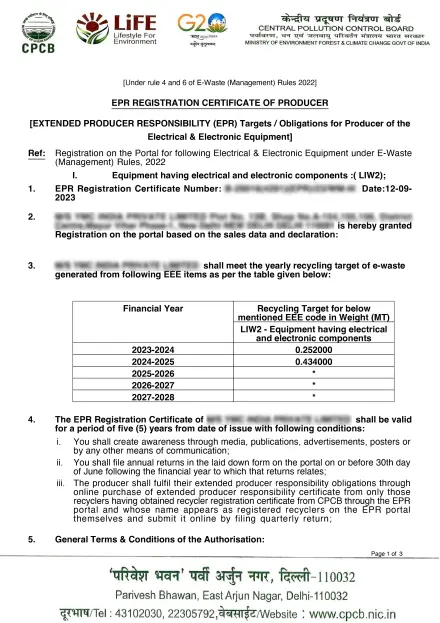
EPR Registration Process for Tyre Waste
The EPR registration process for tyre waste ensures that the producers take responsibility for the recycling and disposal of their products. Below is a step-by-step guide to the EPR registration process for tyre waste :
1. Documentation : Applicants are required to provide complete details for their EPR E-waste certification. Our team of experts will assess all the details and documents for any discrepancies.
2. Filing of EPR Application form : Once all the documents are verified by our team of experts. An application with EPR authorities will be filed for online EPR Authorization for e-waste.
3. Assessment by CPCB : The CPCB will evaluate the online application for e-waste EPR registration. In the event that any concerns or inconsistencies arise, necessary adjustments will be made to address them accordingly.
4. EPR authorisation for waste Tyre : The certificate of authorisation will be granted within 30 days of filling the application. Once the certificate is issued producers are required to implement an EPR action plan to meet EPR target.

Documents Required for EPR Registration for Tyre Waste
These are the following documents required that is required for epr tyre waste registration.
- Pan card of the company
- GST Registration number of the company
- IEC number of the company in case of importing waste tyres
- CIN number of the company
- Aadhar number of the authorised person
- Covering letter
- Undertaking
- Tyre Composition
- Submission of Plantwise manufacturing Data
EPR Registration Fee for Tyres Waste
Below are the government fees for EPR registration as per the 198th Board Meeting. Our professional fees for assistance with EPR registration range from ₹10,000 to 50,000, depending on the quantity of waste generated by the manufacturer, producer, or importer.
| S.No | User Type | Government Fees |
|---|---|---|
| 1 | Producer | ₹25,000 |
| 2 | Recycler | ₹15,000 |
| 3 | Retreader | ₹10,000 |
Note : 0.625/MT for quantity of tyre manufactured/imported in the preceding two years.
Note : The aforementioned Fees is exclusive of GST.
What is EPR Registration for Tyre Waste?
EPR Registration for Tyre Waste pertains to an authorization granted by the Central Pollution Control Board (CPCB) within the framework of India’s Extended Producer Responsibility (EPR), specifically targeting companies engaged in the production, importation, or sale of tyres.
This registration ensures that producers, importers, and brand owners (PIBOs) are accountable for the management of waste tyres resulting from the products they introduce into the market. This includes responsibilities for collection, transportation, recycling, and environmentally sound disposal, in accordance with the Hazardous and Other Wastes (Management and Transboundary Movement) Rules, 2016, as well as the EPR Guidelines for Waste Tyres, 2022.
Benefits of EPR Registration for Tyre Waste
The CPCB handles EPR registration for tyre waste, which requires makers, importers, and recyclers to sustainably manage used tyres while promoting recycling and environmental protection.

- Environmental Safety : EPR guarantees that tyre waste is collected and recycled properly, rather than trashed or burned. This reduces pollution and helps to keep the environment cleaner and healthier.
- Resource Saving :Old tyres have recyclable materials such as rubber and steel. By recycling them through EPR, we save natural resources and reduce the need for new products.
- Energy Efficiency :Recycling tyres uses less energy than making new ones. EPR promotes tyre recycling plants that turn waste tyres into products like rubber flooring, playground surfaces, or road materials.
- More Jobs and Business Opportunities : EPR helps to the development of new recycling and manufacturing companies, leading to more employment possibilities in areas such as collecting, sorting, and making reused materials.
- Legal Compliance : EPR registration helps tyre producers and importers follow government waste rules, avoid penalties, and build a responsible business image.
Cancellation of EPR Registration
- EPR Registration for tyre waste is granted to Producers/Manufacturer can also be liable to cancellation at any point, if the document submitted by the applicant is found to be Incorrect.
- In case of non-compliance of Extended Producer Responsibility (EPR) obligations. CPCB can suspend and or cancel the battery EPR registration, and or impose Environmental Compensation on entities.
- An opportunity will be given to hear the applicant within 15 days from the date of issuance of notice, before considering the case for cancellation or suspension of Battery EPR registration by CPCB.

Key EPR Compliance Rules
- Renwal can be filled 60 days prior to the due date
- The Registration process takes up-to 30 business days to complete.
- Producers are required to fulfill their EPR targets on time to avoid penalties or cancellation
- Cancellation of EPR registration for tyre is subject to CPCB, if any discrepancy is found then the license can be canceled any time.
Conclusion
EPR registration for tyre waste management is an important step towards promoting responsible and sustainable practices in the disposal and recycling of tyres. By implementing EPR obligations, including proper collection, recycling, and safe disposal of tyre waste, we can mitigate the environmental impact and potential hazards associated with improper tyre waste management. EPR registration ensures that producers, manufacturers, and importers of tyres take responsibility for the lifecycle of their products, contributing to a cleaner and healthier environment for present and future generations.
Frequently Asked Questions (FAQs)
What is EPR registration for waste tyres?
EPR registration is a CPCB authorization that ensures tyre manufacturers, importers, and brand owners responsibly collect, recycle, or dispose of end-of-life tyres in an eco-friendly manner.
Who needs to obtain EPR registration for tyre waste?
All tyre producers, importers, and brand owners placing tyres or vehicles with tyres in the market are required to get EPR registration.
What documents are required for tyre waste EPR registration?
You’ll need company incorporation proof, GST, IEC (for importers), product details, and agreements with authorised recyclers.
How can I apply for EPR registration for tyre waste?
You can apply online through the CPCB EPR portal by filling out the application form and uploading the required documents.
What is the validity period of EPR registration for tyre waste?
Typically, the EPR authorisation remains valid for five years and must be renewed before expiry to maintain compliance.
What are the benefits of obtaining EPR registration for tyre waste?
It ensures legal compliance, improves brand reputation, and contributes to sustainability through responsible waste management.
What is the fee for EPR registration for tyre waste?
The EPR registration fee for tyre waste varies based on the company type and production capacity, as per CPCB guidelines, and is payable online during application submission.
How are EPR targets for waste tyres calculated?
The recycling targets are based on the quantity of tyres produced or imported in previous years, reaching 100% by 2024-25.
Speak Directly to our Expert Today

Reliable

Affordable

Assured
Industries Served by
Professional Utilities

Apparels

Footwear

Furniture

Gems and Jewellery

Tourism & Hospitality

Consumer Electronics

Chemicals

Telecom

Oils & Gas

Hotel

Railways

Liquor

Health & Medical

Food Processing

Dangerous/ Haz. Goods

Tea & Coffee

Capital Goods

Recycling

Rubber

NGOs

Silk

Handloom

IT & BPM

Steel

Automobile

Tobacco

Constructions


Testimonials
"Explore how Professional Utilities have helped businesses reach new heights as their trusted partner."





It was a great experience working withProfessional Utilities. They have provided the smoothly. It shows the amount of confidence they are having in their field of work.

Atish Singh


It was professional and friendly experience quick response and remarkable assistance. I loved PU service for section 8 company registration for our Vidyadhare Foundation.

Ravi Kumar
I needed a material safety data sheet for my product and they got it delivered in just 3 days. I am very happy with their professional and timely service. Trust me you can count on them.

Ananya Sharma
Great & helpful support by everyone. I got response & support whenever I called to your system. Heartly thanx for Great & Super Service. Have a Great & Bright future of team & your company.

Prashant Agawekar
Thank you so much Professional Utilities team for their wonderful help. I really appreciate your efforts in getting start business. Pvt Ltd company registration was smooth yet quick.
Abhishek Kumar
I applied for Drug licence and company registration and their follow-up for work and regular updates helped me a lot. They are happily available for any kind of business consultancy.

Vidushi Saini
Great experience went to get my ITR done, process was quite convenient and fast. Had a few queries, am happy about the fact those people explained me all things I wanted to know.

Taniya Garyali
Great services provided by Professional Utilities. They are best in this industry and the best part is their prices are so affordable. Kudos to you. Now you guys are my full-time consultant.

Aftab Alam
Trusted By