Construction & Demolition Waste Management Authorization in Punjab
Get C&D Waste Management Authorization @ ₹99,000

4.9


Construction and Demolition Waste Management Authorization in Punjab
Acquiring Construction and Demolition Waste Management Authorization is crucial because Punjab is one of the most progressive states of India in terms of agriculture as well as industrial and construction development but it is struggling with proper disposal of its increasing construction and demolition wastes. The increase in infrastructure development and also with the increase in the size of urban areas C&D waste has increased tremendously, and it mainly comprises concrete, bricks, metals and woods and any glass. If not properly disposed of, it poses a threat to the environment; it pollutes the land and water sources as well as leading to serious health risks. To extract these qualities, the present briefing discusses several approaches which the state government has developed to enhance waste management and sustainability practices. Some of these measures include establishment of specific C&D waste recycling stations, promoting the recycling and reuse of as many materials as possible and enhancing legislation on proper waste disposal. Awareness campaigns to construction companies, builders and the public are also being carried out with an aim of having proper waste management done. Moreover, the government is well involved in the PPP structures that would ensure effective development of innovative and sustainable solutions to the management of C&D waste. By means of these comprehensive measures, Punjab will also be able to cope with the adverse impacts of the constructions and contribute in creating a cleaner, greener and sustainable built environment for the burgeoning populace of the Punjab province.
Process for Construction and Demolition Waste Management Authorization in Punjab
These usually involve a number of formalities such as obtaining all the legal permits, conforming to the legal requirements when it comes to disposal of wastes and applying all the measures of effective waste management. Here you will get some stress understanding the authorization process:
- Step 1: Preparation of Waste Management Plans
Every waste generator and service provider while implementing the rules is required to draw a new waste management plan within a period of six months from the date of notification. This plan should contain provisions on how to segregate, store, collect, reuse or recycle, transport and dispose of C&D waste within their jurisdiction.
- Step 2: Application for Authorization
The operators of the C&D waste processing facilities require the authorization of the State Pollution Control Board (SPCB) or the Pollution Control Committee (PCC) through Form I in which the applicant must prove that the facility meets the environmental standards and adequate infrastructural provisions are in place.
- Step 3: Assessment by SPCB/PCC
If approved, the SPCB/PCC assesses the application on its compatibility to conform to specified environmental qualities of the facility. Also as part of the Research Analysis, the needs for development of these infrastructure, technology and operational plan of the facility will be evaluated against the projections of the C&D waste generation.
- Step 4: Granting of Authorization
Upon successful assessment, the SPCB/PCC grants authorization to the facility. This authorization is crucial for the facility to operate legally and is subject to periodic monitoring and compliance checks by the SPCB/PCC.
- Step 5: Monitoring and Compliance
Once the SPCB/PCC conducts the assessment and approves it, the SPCB/PCC then gives the authorization to the facility. It is a legal requirement for such a facility to be authorized to operate and such authorization must be coordinated by the SPCB/PCC and may include periodic reviews and check-ups.

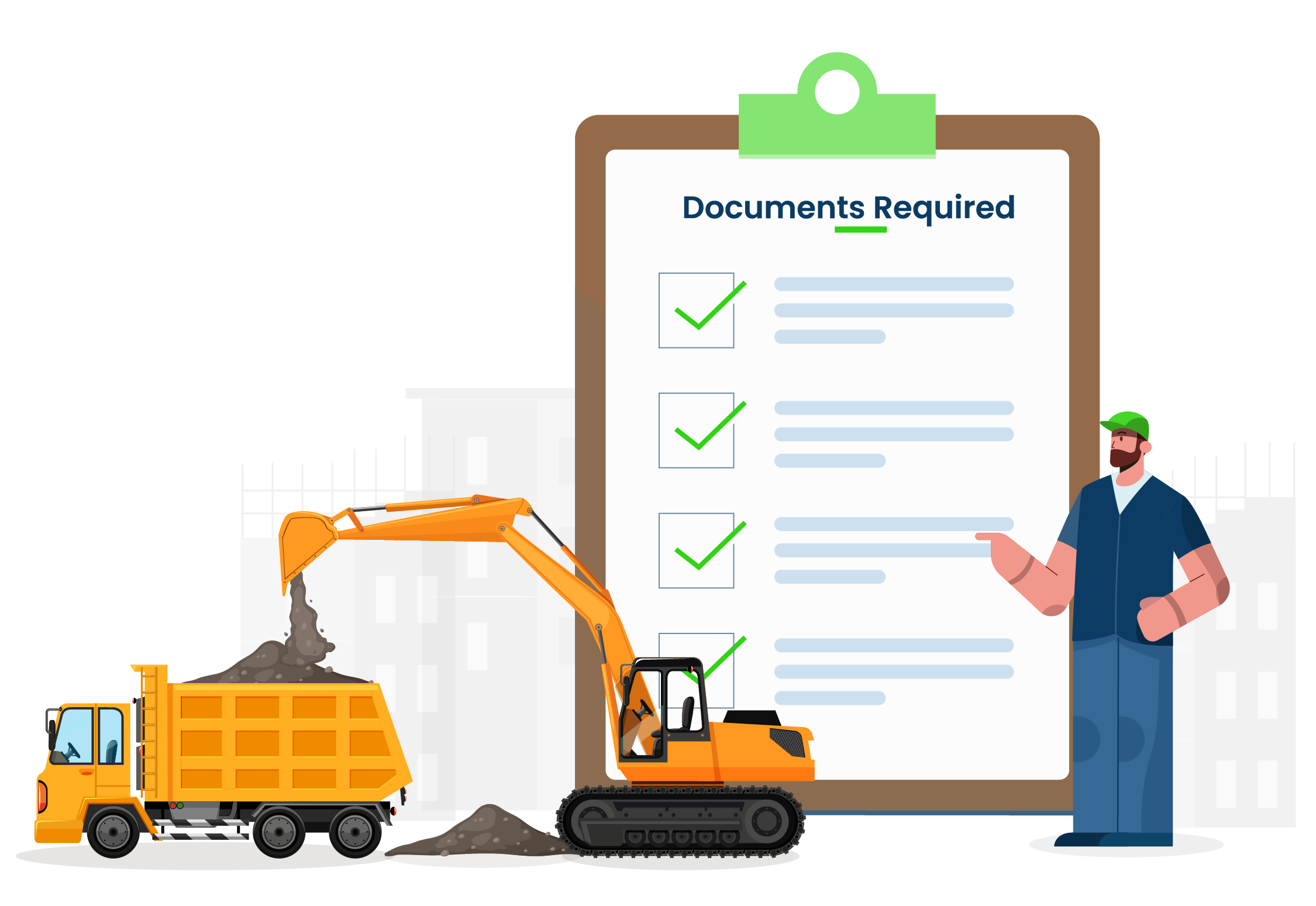
Documents Required for Construction and Demolition Waste Management Authorization in Punjab
To obtain authorization for a Construction and Demolition (C&D) waste management facility in India, the following documents are required:
- Application in Form I of the C&D Waste Management Rules, 2016
- GST Certificate
- PAN Card of the Authorized Signatory
- Layout plan of the proposed facility
- Process flow chart
- Details of the machinery to be installed
- Proof of ownership of site or rent/lease agreement
- Factory license/trade license
- Technical report on Collection, Storage, Processing or recycling facilities for C&D waste
- Comprehensive waste management plan covering segregation, storage, collection, reuse, recycling, transportation, and disposal of C&D waste
Fee Charges for Construction and Demolition Waste Management Authorization in Punjab
Professional Fees to obtain Construction and Demolition Waste Management Authorization in ₹99,000 (only with Professional Utilities)
What is Construction and Demolition Waste?
Construction & Demolition waste also known as the Construction & Demolition materials include waste products such as rubble that are produced as a result of construction, improvement or destruction of structures. This waste stream comprises elements such as concrete, bricks, wood, metal, glass, tiles, and plastics. In construction processes, the common wastes include concrete and metals where the materials used in construction such as concrete and metal are initially cut or shaped and then thrown away as scrap, demolition processes involve wastes where structures are brought down, and they are dismantled. Another way in which renovation projects add to the amount of C&D waste is by removal of existing fixtures, fittings and building elements.
C&D waste is an environmental and management problem. If ineffective, it results in land degradation, water bodies pollution and enhanced emission of greenhouse gasses. This sometimes leads to congestion of the C&D waste hence exerting pressure on the waste management systems thus having cases of instances whereby the wastes are dumped unlawfully and those that are dumped are not well managed. Besides, poor disposal has implications in the development of health risks to communities and workers as well.
C&D waste management can therefore entail source separation, recycling and reuse of the construction and demolition waste. When different waste reduction methods and technological advances in recycling are incorporated within the C&D waste management systems, it then becomes easy to reduce the effects that these wastes have on the environment and at the same time conserve natural resources.
Benefits of Construction and Demolition Waste Management Authorization in Punjab
Construction and Demolition Waste Management Authorization offers numerous benefits that impact the environment, economy, and society. Here are some key benefits:
- Job Creation: C&D waste takes employment in fields such as recycling centers, waste processing centers, and environmental consultant services.
- Economic Growth: Effective waste management enhances economic development by reducing waste disposal costs and material purchases, while also offering challenges that can be harnessed to develop new technologies in waste recycling.
- Material Recovery: Some materials in C&D waste can be used in other construction projects, reducing the need for new materials and supporting the circular economy.
- Cost Savings: Waste management can lead to lower expenditures as disposal fees decrease, and recycled materials reduce the need to purchase raw materials frequently.
- Reduced Landfill Use: Appropriate disposal decreases the volume of C&D waste sent to landfills, reducing pressure on these facilities and helping to prevent land degradation.
Validity of Construction and Demolition Waste Management Authorization in Punjab
The C&D Waste Management Authorisation to be granted is valid for a period of 5 years as per Construction & Demolition Waste Management Rules, 2016.
The key points regarding the validity of the authorization are:
- The State Pollution Control Board (SPCB) or Pollution Control Committee (PCC) issues permission to C&D waste processing establishments in Form III.
- The authorization remains valid for a period of 5 years nevertheless conditions emerged by the SPCB/PCC that may force the invalidation of the authorization.
- Where the authorization is to be renewed, the application must be made three months to the expiration of the authorization.
- When considering the renewal of the authorization the SPCB/PCC must be certain that there has been no breach of the conditions laid down in the initial license.
Conclusion
Having the construction and demolition waste management authorization is crucial because efficient and effective handling of construction and demolition (C&D) waste is essential for Punjab’s development, environmental protection, and public health. The state has established a formal authorization framework managed by the State Pollution Control Board (SPCB) or Pollution Control Committee (PCC), which includes preparing waste management plans, applying for authorization, and ensuring ongoing compliance monitoring. In a wider regulatory perspective, similar structured approaches can be seen in regions like Construction and Demolition Waste Management Authorization in Ladakh, reinforcing the importance of proper waste governance. Effective C&D waste management not only reduces environmental harm but also promotes recycling, job creation, and resource recovery, contributing to a healthier and more sustainable future for both urban and rural populations in Punjab.
FAQ's on Construction and Demolition Waste Management
Why is proper management of C&D waste important in Punjab?
Appropriate disposal of C&D waste should be done in order to reduce further pollution, effects on the environment, contamination of land and water sources as well as health effects. It also assists in material recovery, cost cutting and offloading the amount of load that reaches the landfill sites.
Who is responsible for managing C&D waste in Punjab?
C&D waste management is mainly the responsibility of the waste producers such as builders, contractors and the service providers. They need to conform to the rules and regulations by the Punjab State Pollution Control Board (PSPCB) or Pollution Control Committee (PCC).
What is the process for obtaining authorization for a C&D waste management facility in Punjab?
The steps in this case include, development of a waste management plan, making an application with the SPCB of Punjab or PCC, an assessment process by the SPCB or PCC and authorization if the facility passes environmental standards. Compliance with the procedure requires constant checking of samples every one to two weeks.
How long is the C&D waste management authorization valid in Punjab?
The authorization is obtained for a period of five years after which one is required to make an application for renewal again. One has to apply for renewal at least three months before his or her current authorization expires.
Speak Directly to our Expert Today

Reliable

Affordable

Assured
Construction and Demolition Waste Management Authorization in Other States
Testimonials
"Explore how Professional Utilities have helped businesses reach new heights as their trusted partner."





It was a great experience working withProfessional Utilities. They have provided the smoothly. It shows the amount of confidence they are having in their field of work.

Atish Singh


It was professional and friendly experience quick response and remarkable assistance. I loved PU service for section 8 company registration for our Vidyadhare Foundation.

Ravi Kumar
I needed a material safety data sheet for my product and they got it delivered in just 3 days. I am very happy with their professional and timely service. Trust me you can count on them.

Ananya Sharma
Great & helpful support by everyone. I got response & support whenever I called to your system. Heartly thanx for Great & Super Service. Have a Great & Bright future of team & your company.

Prashant Agawekar
Thank you so much Professional Utilities team for their wonderful help. I really appreciate your efforts in getting start business. Pvt Ltd company registration was smooth yet quick.
Abhishek Kumar
I applied for Drug licence and company registration and their follow-up for work and regular updates helped me a lot. They are happily available for any kind of business consultancy.

Vidushi Saini
Great experience went to get my ITR done, process was quite convenient and fast. Had a few queries, am happy about the fact those people explained me all things I wanted to know.

Taniya Garyali
Great services provided by Professional Utilities. They are best in this industry and the best part is their prices are so affordable. Kudos to you. Now you guys are my full-time consultant.

Aftab Alam
Trusted By