Get BIS Certificate for construction & Mining Machines

4.9


BIS Certificate For All types of machinery for construction
As construction, earthmoving and mining continue to grow more complex in an increasingly competitive environment, machinery is crucial in increasing profitability. Everything from excavators, bulldozers, and haul trucks to drilling rigs, are critical in performing tasks that create structures and extract valuable assets. Since these machines are used in many industries, it becomes important that they are well-produced and free from dangers. In India, the certification agency of the machinery is the Bureau of Indian Standards (BIS) which imposes very high standard which has to be followed by the manufacturer. It also confirms the safety of the equipment the performance of which complies with the standards set by the company and enhances consumer satisfaction with products that are in circulation in the market. While the construction and mining industries are gradually advancing, a focus on the machinery involved with the BIS QCOS becomes necessary for stakeholders who want to focus on quality and dependable machinery.
This blog explores many topics related to machines in these industries, such as manufacturing processes, testing, certifications, and the importance of BIS certification for functioning at optimal capacity.
BIS Registration Sample
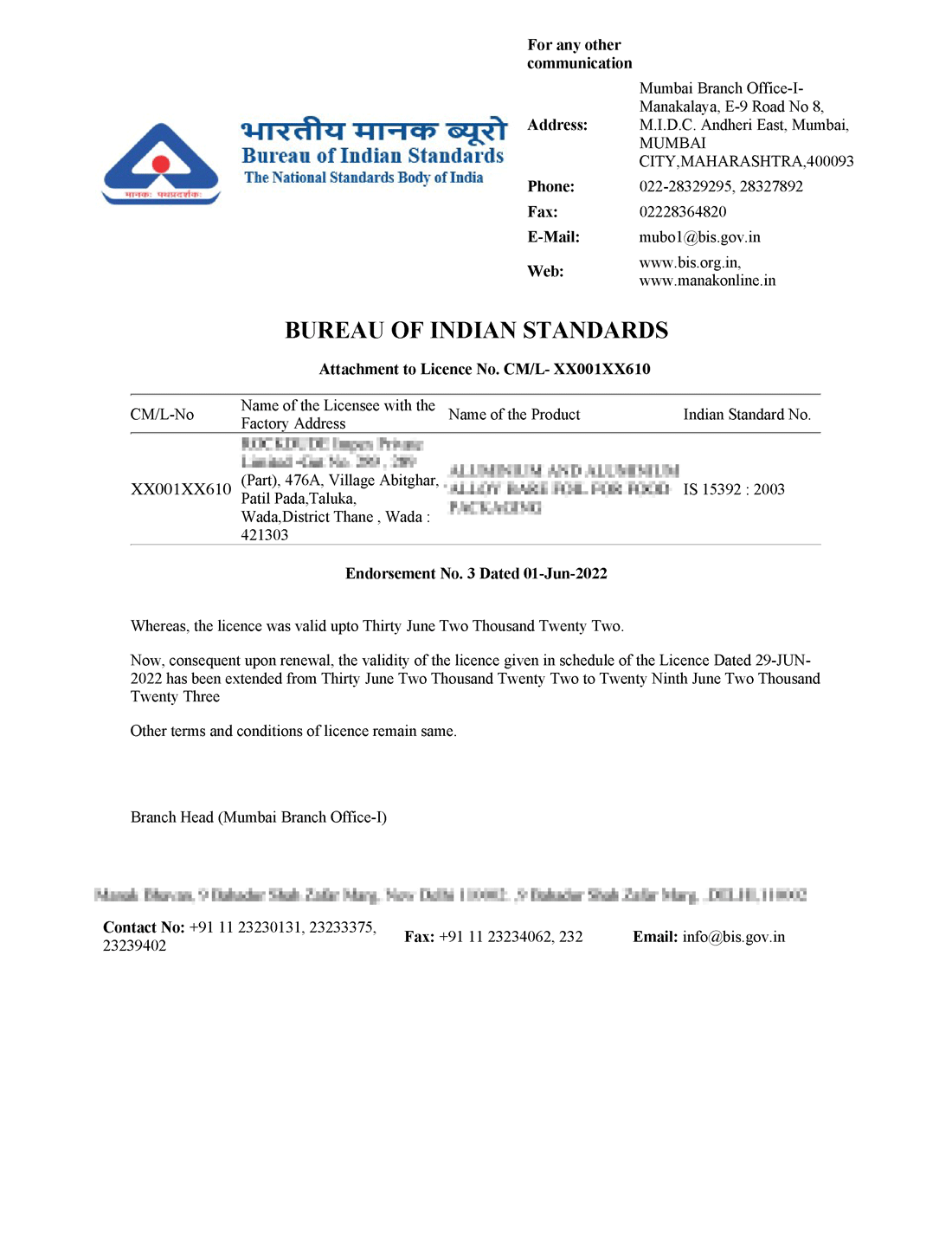
Table of Content
- What is the Role of Heavy Machines?
- Manufacturing Process of Heavy Machines
- Performance Requirement for Heavy Machines
- Testing Methods for Heavy Machines
- Laboratory Requirements for Heavy Machines
- Labeling and Marking Requirement for Heavy Machines
- Documents Required for Heavy Machines BIS Certification
- BIS Certification Process for Heavy Machines
- Importance of BIS Certification for Heavy Machines
- Conclusion
- Frequently Asked Questions (FAQs)

What is the Role of Construction, Earthmoving & Minning Machines?
Every construction, earthmoving, and mining activity involves the use of machines which are important tools in the advancement of these sectors. They are intended to carry out several tasks effectively and with no jeopardizing the productivity of those sectors. The main categories of machinery include:
- Construction Machinery: Plant utilized in the construction of infrastructure like roads, bridges, and building structures. This includes cranes, mixers, and bulldozers among others.
- Earthmoving Machinery: Excavators are particularly used on construction sites mainly for digging activities. Major examples include backhoe loaders, dump trucks, and graders.
- Mining Machinery: Equipment used in the mining industry for the extraction or removal of minerals or other earth materials. These include drills, shovels, and haul trucks.
Many of these machines are made up of a number of subassemblies and individual parts, which is essential to retain quality in order to provide safe and efficient operation.

Manufacturing Process of Construction, Earthmoving & Minning Machines?
The manufacturing process for construction, earthmoving, and mining machinery typically involves several stages:
- Design and Engineering: Previous design processes include pre-concept design, front-end engineering design, and assessments.
- Material Selection: Selecting the right materials to be used in construction that provide the desired strength and durability.
- Fabrication: Involves processes such as cutting, welding, machining, and assembling parts to form machinery components.
- Assembly: Sub-assemblies are built and combined into full systems or finished products.
- Testing: Efficiency and safety tests are performed to verify product performance and reliability.
While undertaking such processes, manufacturers are required to follow directives presented by the BIS to be able to have quality products.
Performance Requirement for Construction & Minning Machines
Technical specifications relative to pneumatic tires operating on construction, earthmoving, and mining machinery are particularly significant to performance and safe operation in application. These requirements may include:
- Load Capacity: The grouping of weight which the machine can lift, transport, or otherwise move without risk of damage or breakdown.
- Operational Speed: The number of cycles per unit of time during which the machine is expected to run in various circumstances.
- Fuel Efficiency: The consumption of fuel per unit of product produced.
Testing methods used to evaluate these performance metrics typically involve:
- Field Testing: Field tests to check the efficiency or effectiveness of an item under practical operational conditions.
- Laboratory Testing: Tests conducted in a controlled environment to evaluate specific characteristics such as material strength and durability.
Testing Methods for Construction & Minning Machines
Various testing methods are employed to ensure that machinery meets the required standards:
Destructive Testing
Manipulation-type tests where parts of the material are subjected to deformation to measure its character (such as tensile strength).
Non-destructive Testing (NDT)
Ultrasonic testing, magnetic particle inspection, and similar methods that do not harm the equipment in any manner.
Functional Testing
Ascertaining the effectiveness of the machine in the context of operation.
All these modes are useful in detecting failures or flaws before the machinery is used in the operational settings.
Laboratory Requirements for Construction & Minning Machines
To conduct testing on All types of machinery for construction, earthmoving, Mining and (or)their assemblies /subassemblies/components effectively, laboratories must adhere to specific requirements:
- Equipment: State-of-the-art testing equipment like tensile testing machines, spectrometers, and ultrasonic testing gadgets should be included.
- Qualified Personnel: Technicians must understand and be trained in various testing techniques and protocols to conduct efficient and accurate tests.
- Quality Control Procedures: The applying organization should ensure proper quality assurance practices to enhance the reliability of tested samples in laboratories.
Labeling and Marking Requirement for Construction & Minning Machines
Labeling and markings are fundamental requirements of BIS standards regarding specifications for All types of machinery for the treatment of material by a process involving a change of temperature and(or)their assemblies /sub-assemblies /components. Each product must include:
- Manufacturer's Name or Trademark: Clearly indicates who produced the product, ensuring transparency and trust for the consumer.
- ISI Mark: Must be affixed prominently if the product has been certified to conform to Indian Standards.
- Material Information: Labels should mention the materials the footwear is made from and provide relevant safety or usage details.
- Packaging Requirements: The packaging should be labeled with the product type and care instructions to help customers maintain the product for a longer period.
Documents Required for Heavy Machines BIS Certification
Here are given Important Documents for All types of Machinery for Construction, Earthmoving, Mining and their assemblies.
| General Documents | Technical Documents |
|---|---|
| Business License | Plant Layout |
| Trademark License | List of Manufacturing Equipment |
| Application Form | Manufacturing Process Flow Chart |
| Authorization Letter | Product Literature |
| Laboratory Test Reports | List of testing equipment and machinery |
| MSME Certificate | Product’s Technical Specification |
| List of Calibration Certificate |
BIS Certification Process for Construction & Minning Machines
The BIS certification process for All types of machinery for construction, earthmoving, Mining, and (or)their assemblies /subassemblies/components:
Step 1: Application Submission
Applications are filled including relevant documents that outline the production processes of the manufacturers.
Step 2: Factory Inspection
A BIS officer pays a visit to the manufacturing company in order to assess the levels of compliance with set regulations.
Step 3: Product Testing
The samples from the production batches are analyzed at the BIS-accredited laboratories.
Step 4: Issuance of License
As a result of the evaluation of these facilities and products, BIS grants permission to the manufacturers to use the ISI mark on their products.
Step 5: Surveillance Audits
To sustain the standards practice, normal assertions are carried out.
This is a process that the manufacturers need to understand so that they can get an efficient certification process.
Importance of BIS Certification for Construction & Minning Machines
BIS certification is crucial for several reasons:
- Market Access: Products must bear the ISI mark as it is mandatory for any manufacturer intending to sell construction, earthmoving, or mining machinery (including assemblies, subassemblies, and components) in India. Without this certification, market entry is restricted.
- Consumer Safety: Certification ensures that products meet required standards, protecting consumers from potentially dangerous equipment.
- Quality Assurance: BIS certification ensures products conform to strict quality control measures, promoting consistency and reliability.
- Regulatory Compliance: BIS certification aligns products with government-approved legal standards, helping manufacturers avoid legal complications.
- Brand Credibility: The ISI mark boosts brand value by assuring consumers that the product adheres to national quality benchmarks.
- Environmental Considerations: BIS regulations include guidelines that limit the use of harmful chemicals in manufacturing, encouraging environmentally responsible practices.
Conclusion
Construction, earthmoving, and mining machinery industries are also changing with a focus on BIS certification. Besides the safety of products, this process helps to build up consumer confidence in the products made in India. When India is planning to enhance manufacturing capacities in accordance with the policy of ‘Make in India,’ it will be really important to follow these quality control measures in order to gain a competitive advantage at the global level.
Frequently Asked Questions (FAQs)
What is BIS certification?
BIS certification simply refers to a certification that shows that a given product complies with particular Indian Standards set by BIS.
How to get BIS certificate?
To get a BIS certificate, first identify the correct certification scheme (ISI, CRS, or FMCS) based on your product. Get the product tested in a BIS-approved lab as per the relevant Indian Standard. Then, apply online through the BIS portal with all required documents, including test reports and manufacturing details. For certain schemes, a factory inspection will be conducted. If all requirements are met, BIS issues the certificate, allowing the use of the standard mark. Ongoing compliance through audits and testing is required to maintain the certification.
What makes BIS certification important?
Product quality, safety measures, market access, and the confidence levels of companies and customers improve with BIS certification.
Do construction and mining machines require a BIS registration process similar to embroidery machinery?
Yes, both construction and mining machines, as well as embroidery machinery, must comply with BIS standards that ensure product safety and performance. To know more about the certification process, visit BIS Registration for All Types of Embroidery Machinery.
Speak Directly to our Expert Today

Reliable

Affordable

Assured
Testimonials
"Explore how Professional Utilities have helped businesses reach new heights as their trusted partner."





It was a great experience working withProfessional Utilities. They have provided the smoothly. It shows the amount of confidence they are having in their field of work.

Atish Singh


It was professional and friendly experience quick response and remarkable assistance. I loved PU service for section 8 company registration for our Vidyadhare Foundation.

Ravi Kumar
I needed a material safety data sheet for my product and they got it delivered in just 3 days. I am very happy with their professional and timely service. Trust me you can count on them.

Ananya Sharma
Great & helpful support by everyone. I got response & support whenever I called to your system. Heartly thanx for Great & Super Service. Have a Great & Bright future of team & your company.

Prashant Agawekar
Thank you so much Professional Utilities team for their wonderful help. I really appreciate your efforts in getting start business. Pvt Ltd company registration was smooth yet quick.
Abhishek Kumar
I applied for Drug licence and company registration and their follow-up for work and regular updates helped me a lot. They are happily available for any kind of business consultancy.

Vidushi Saini
Great experience went to get my ITR done, process was quite convenient and fast. Had a few queries, am happy about the fact those people explained me all things I wanted to know.

Taniya Garyali
Great services provided by Professional Utilities. They are best in this industry and the best part is their prices are so affordable. Kudos to you. Now you guys are my full-time consultant.

Aftab Alam
Trusted By